
This newsletter is free and goes out to over 25,000 subscribers, but it’s only able to sustain itself due to the support I receive from a small percentage of regular readers. Would you please consider becoming one of those supporters? You can subscribe via Patreon or the Subscribe button below! You can also make one-time donations through Venmo, CashApp, or PayPal.
Middle school students in Virginia who wanted to form a “Genders and Sexualities Alliance” group, only to be blocked by their district, have finally won their legal case just as the issue was set to head to trial.
As I wrote a few months ago, I initially thought this lawsuit was just in response to a straight-up denial of the group, but the more details I learned, the more I realized this district went out of its way to make sure this particular club, which used to be called the “Gay-Straight Alliance,” never met.
The drama began last August, when a seventh grader approach a teacher at King George Middle School about being the sponsor of the club (one of the prerequisites). With that person secure, they went ahead and filled out the necessary paperwork.
But within a couple of weeks, parents began complaining on a local Facebook group and doxxed the faculty sponsor, accusing her of grooming kids and demanding she be fired.
Instead of fully backing the group and sponsor, the school board and superintendent said they would put the GSA group “on pause” while they investigated matters… even though there was nothing to investigate.
The only legal way to prevent this group from forming was to ban all student-led non-curricular groups, per the Equal Access Act, but in October of 2025, the school board announced a different plan: They would let the principals get the say-so on any new student-led groups—and if a principal’s decision was appealed, the superintendent would serve as “final decisionmaker.” (The level of micro-managing here was beyond absurd.) They also said all new groups needed at least 10 members, a number they pulled out of nowhere. (It wouldn’t have mattered since 17 students expressed interest in the GSA.)
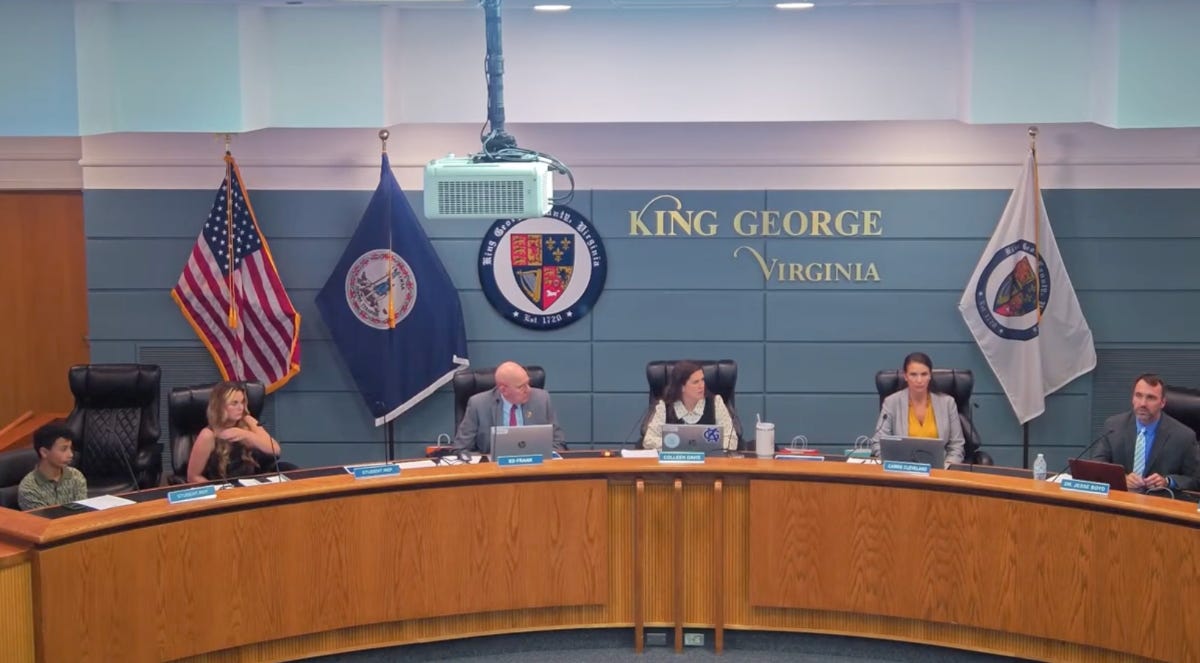
Even beyond that, board members argued that a GSA club would fail an “age-appropriateness” test, as if these students would gather each week to have orgies. (Apparently, gathering to discuss how you’re persecuted by others is too mature, but religious clubs that meet to discuss how non-believers will be tortured for all eternity are perfectly fair game.)
It was at this point that the Plaintiffs’ lawyers wrote a letter to the school board saying this delay was unconstitutional. (They never heard back.)
The school board only got worse after that.
In November, they approved a policy that only allowed non-curricular clubs at the high school level, effectively banning the GSA in a middle school. (This was happening even though Virginia law defines “secondary” education to include middle school, meaning you can’t treat a middle school different from a high school in this regard.)
The irony in all of this is that the school board attempted to play things neutral but so very clearly singled out the GSA group. At one point, middle school principal Dr. Casey Nice suggested the kids form a “PRISM Club,” which is similar to a Gay-Straight Alliance but doesn’t reference those identities. Superintendent Dr. Jesse Boyd said it was still a no-go, however, “because it was connected to LGBTQ+ topics.“ (The students weren’t fans of the proposal anyway.)
It got worse: Dr. Nice told one of the students’ mothers that the club might be approved if it was renamed the “Kindness Club” or the “Safe Space Group,” also erasing the LGBTQ+ identities. The students refused to play along.
This is how things went for months.
Administrators kept finding new reasons to prevent the GSA from forming while still breaking the law. The middle school allowed other non-curricular clubs to exist (like Yearbook Club and Robotics Club) but refused to approve the Gay-Straight Alliance. They even approved an outdoor club that had students “skinning squirrels.” What’s the curricular tie-in for that? Who knows.
That became an issue when a “Fellowship of Christian Athletes” club tried to form but couldn’t because of the new rules, and yet the administrators attempted to justify approval of the FCA by saying it was about leadership, which would make it “curricular.” (Bullshit.)
That’s why the ACLU of Virginia and Potomac Law Group sued the district.
Their clients have done everything by the book, they said, only to have the school board and administrators serve as obstacles every step of the way.
“King George County Schools cannot move the goalposts to prevent an organization that promotes respect and equality for LGBTQ+ students from existing just because school board members disagree with its message,” said ACLU-VA Staff Attorney Julia Kahn. “The First Amendment and Equal Access Act protect all students, and the school board cannot pick and choose who the rules apply to. Why this club, and not others?”
…
“Student clubs help students build community, find belonging, and thrive, and when schools offer those opportunities, the law requires that they be available on equal terms to all students,” said Mary Rohmiller, partner at Potomac Law Group. “But King George County Schools appears to be applying a double standard to the GSA at its middle schools. The students at the heart of this case are not asking for special treatment – they’re asking for equal treatment.”
It was such an absurd set of facts for something that probably wouldn’t have been an issue at all if school officials had just said yes at the very beginning. After all, who gives a damn if angry conservative parents complain? They complain about everything, never with any justification, so why not simply ignore them?
Maybe we know the answer. According to The Advocate, this particular school board had been anti-trans for a while:
The Advocate reported in January that the board had unanimously adopted a policy directing staff to use only the names and pronouns listed in students’ official records. The policy also restricts restroom access, overnight accommodations, and participation in sex-separated activities based on sex assigned at birth.
The lawsuit accused the district of violating the First Amendment and the Equal Access Act. The Plaintiffs included two (unnamed) students and their parents. One of the students was going to be in eighth grade this school year, meaning this case couldn’t just be dismissed as moot.
What the district’s actions made clear, however, is that this was never about procedure, or “age-appropriateness,” or some distinction between curricular and non-curricular clubs. Those were excuses they invented after the fact to block the group from forming. Every time the students met one requirement, administrators created another. The goalposts kept moving. And they made clear their biggest concern was that people might recognize that there’s an LGBTQ club on campus—one where students might identify as such openly. The only option those kids were given was to make themselves invisible.
But there is now a major update in the case.
On Friday, with the threat of a trial looming, along with discovery, and after a closed session during which staffers briefed board members on “actual or probable litigation,” the King George County School Board decided to rescind its own rules banning non-curricular clubs at middle schools by adopting more inclusive rules. (It took all of a minute during the actual meeting. At no point was the lawsuit publicly discussed.)
So they’re right back to where they started.
More specifically, the revised policies say all secondary schools (including middle schools) can organize and conduct non-curricular clubs. All students must have parental permission to join those clubs and renewal of the clubs requires a list of current members—which might deter some students from joining the GSA—but those are rules that apply to everyone.
This didn’t come out of nowhere, though. Last week, a federal judge announced that the two sides had reached a settlement, though the details had not been made public at the time. That settlement now appears to be complete capitulation from the school board.
But the board members want you to have sympathy… for them. The Fredericksburg Free Press reported on a statement that went out to parents in the district:
Board member Ed Frank said every student deserves safety, dignity, and protection from bullying. He defended the board’s focus on “age appropriateness, parental transparency, and rules governing extracurricular discussions.”
“In this situation, there is nothing to boast about, because the real victims are the students who aren’t yet developmentally ready,” Frank said.
Board member Colleen Hoover said “a lot of blood, sweat, and tears” went into the deliberations. She urged the community to support board members more when decisions become difficult.
They want you to think they were the real victims and not the students whom they shut out due to their own ignorance and bigotry and cowardice. Frank’s comments highlight that by focusing on “age appropriateness,” as if discussions about bigotry don’t belong in a middle school, and being “developmentally ready,” as if tweens couldn’t possibly know anything about about their sexual orientations or gender identities and are only focused on sex. That’s not what GSA clubs are about. Even though he approved the revised policies, his lack of understanding still shines through.
While the decision is welcome, The Advocate notes that we don’t actually know what happens now:
It remains unclear whether the students must restart the application process, when the GSA will be allowed to meet, or whether the settlement contains protections against selective enforcement of the new requirements.
We can at least rest assured that further obstacles to prevent a GSA club from forming will be monitored.
We also don’t know why school officials caved under the weight of a right-wing fake outrage campaign last year or how they plan to ignore the backlash this time around if and when the GSA group is formed.
Still, this is a complete victory for the students who wanted to form the group over the adults tasked with being their educators and mentors. Those adults chose to listen to conservatives who don’t understand the law and can’t handle mature discussions about LGBTQ issues instead of students who have to deal with those conversations every day and know their rights.
Those students showed more integrity than the adults running their school system. They understood that renaming their club to hide who they are was nothing more than cowardice. And they held firm for a year while this played out in courts.
The King George County School Board fixed a mistake it created, but this whole situation could have been avoided if they simply did the right thing in the first place.
(Portions of this article were published earlier)
Big-time kudos and congrats to the founders of the Genders and Sexualities Alliance ... and an equally sized Bronx Cheer to the parents and faculty who were trying to stop them.
We're talking about kids who are discovering their sexuality here. In multiple cases, that discovery may be of something that doesn't fall inside ±3 Sigma, and in an environment that generally expect conformance, that can be damned hard. To be able to get together with others of one's own age and be able to discuss experiences and feelings in an accepting group would, to my mind, be hugely beneficial. Meanwhile, the grownups are worrying about ORGIES???
One has to ask: just who here is the more adult?
𝑊ℎ𝑎𝑡 𝑡ℎ𝑒 𝑑𝑖𝑠𝑡𝑟𝑖𝑐𝑡’𝑠 𝑎𝑐𝑡𝑖𝑜𝑛𝑠 𝑚𝑎𝑑𝑒 𝑐𝑙𝑒𝑎𝑟, ℎ𝑜𝑤𝑒𝑣𝑒𝑟, 𝑖𝑠 𝑡ℎ𝑎𝑡 𝑡ℎ𝑖𝑠 𝑤𝑎𝑠 𝑛𝑒𝑣𝑒𝑟 𝑎𝑏𝑜𝑢𝑡 𝑝𝑟𝑜𝑐𝑒𝑑𝑢𝑟𝑒, 𝑜𝑟 “𝑎𝑔𝑒-𝑎𝑝𝑝𝑟𝑜𝑝𝑟𝑖𝑎𝑡𝑒𝑛𝑒𝑠𝑠,” 𝑜𝑟 𝑠𝑜𝑚𝑒 𝑑𝑖𝑠𝑡𝑖𝑛𝑐𝑡𝑖𝑜𝑛 𝑏𝑒𝑡𝑤𝑒𝑒𝑛 𝑐𝑢𝑟𝑟𝑖𝑐𝑢𝑙𝑎𝑟 𝑎𝑛𝑑 𝑛𝑜𝑛-𝑐𝑢𝑟𝑟𝑖𝑐𝑢𝑙𝑎𝑟 𝑐𝑙𝑢𝑏𝑠. 𝑇ℎ𝑜𝑠𝑒 𝑤𝑒𝑟𝑒 𝑒𝑥𝑐𝑢𝑠𝑒𝑠 𝑡ℎ𝑒𝑦 𝑖𝑛𝑣𝑒𝑛𝑡𝑒𝑑 𝑎𝑓𝑡𝑒𝑟 𝑡ℎ𝑒 𝑓𝑎𝑐𝑡 𝑡𝑜 𝑏𝑙𝑜𝑐𝑘 𝑡ℎ𝑒 𝑔𝑟𝑜𝑢𝑝 𝑓𝑟𝑜𝑚 𝑓𝑜𝑟𝑚𝑖𝑛𝑔. 𝐸𝑣𝑒𝑟𝑦 𝑡𝑖𝑚𝑒 𝑡ℎ𝑒 𝑠𝑡𝑢𝑑𝑒𝑛𝑡𝑠 𝑚𝑒𝑡 𝑜𝑛𝑒 𝑟𝑒𝑞𝑢𝑖𝑟𝑒𝑚𝑒𝑛𝑡, 𝑎𝑑𝑚𝑖𝑛𝑖𝑠𝑡𝑟𝑎𝑡𝑜𝑟𝑠 𝑐𝑟𝑒𝑎𝑡𝑒𝑑 𝑎𝑛𝑜𝑡ℎ𝑒𝑟. 𝑇ℎ𝑒 𝑔𝑜𝑎𝑙𝑝𝑜𝑠𝑡𝑠 𝑘𝑒𝑝𝑡 𝑚𝑜𝑣𝑖𝑛𝑔. 𝐴𝑛𝑑 𝑡ℎ𝑒𝑦 𝑚𝑎𝑑𝑒 𝑐𝑙𝑒𝑎𝑟 𝑡ℎ𝑒𝑖𝑟 𝑏𝑖𝑔𝑔𝑒𝑠𝑡 𝑐𝑜𝑛𝑐𝑒𝑟𝑛 𝑤𝑎𝑠 𝑡ℎ𝑎𝑡 𝑝𝑒𝑜𝑝𝑙𝑒 𝑚𝑖𝑔ℎ𝑡 𝑟𝑒𝑐𝑜𝑔𝑛𝑖𝑧𝑒 𝑡ℎ𝑎𝑡 𝑡ℎ𝑒𝑟𝑒’𝑠 𝑎𝑛 𝐿𝐺𝐵𝑇𝑄 𝑐𝑙𝑢𝑏 𝑜𝑛 𝑐𝑎𝑚𝑝𝑢𝑠—𝑜𝑛𝑒 𝑤ℎ𝑒𝑟𝑒 𝑠𝑡𝑢𝑑𝑒𝑛𝑡𝑠 𝑚𝑖𝑔ℎ𝑡 𝑖𝑑𝑒𝑛𝑡𝑖𝑓𝑦 𝑎𝑠 𝑠𝑢𝑐ℎ 𝑜𝑝𝑒𝑛𝑙𝑦. 𝑇ℎ𝑒 𝑜𝑛𝑙𝑦 𝑜𝑝𝑡𝑖𝑜𝑛 𝑡ℎ𝑜𝑠𝑒 𝑘𝑖𝑑𝑠 𝑤𝑒𝑟𝑒 𝑔𝑖𝑣𝑒𝑛 𝑤𝑎𝑠 𝑡𝑜 𝑚𝑎𝑘𝑒 𝑡ℎ𝑒𝑚𝑠𝑒𝑙𝑣𝑒𝑠 𝑖𝑛𝑣𝑖𝑠𝑖𝑏𝑙𝑒.
When Christian Nazionalists buy goalposts, they get them factory equipped with wheels. Their actual goal here was to erase LGBTQ kids, and every time the kids proved unerasable, they tried something else to erase them.