
This newsletter is free and goes out to over 24,000 subscribers, but it’s only able to sustain itself due to the support I receive from a small percentage of regular readers. Would you please consider becoming one of those supporters? You can subscribe via Patreon or the Subscribe button below! You can also make one-time donations through Venmo or PayPal.
On Friday, the Texas State Board of Education officially mandated Bible readings in public schools as part of a revised curriculum. The Republican-dominated board voted 9-5 to include Christian stories in a longer required reading list—while excluding stories from any other major religion that teach similar lessons.
It’s not a surprise that it happened, but it’s still disappointing.
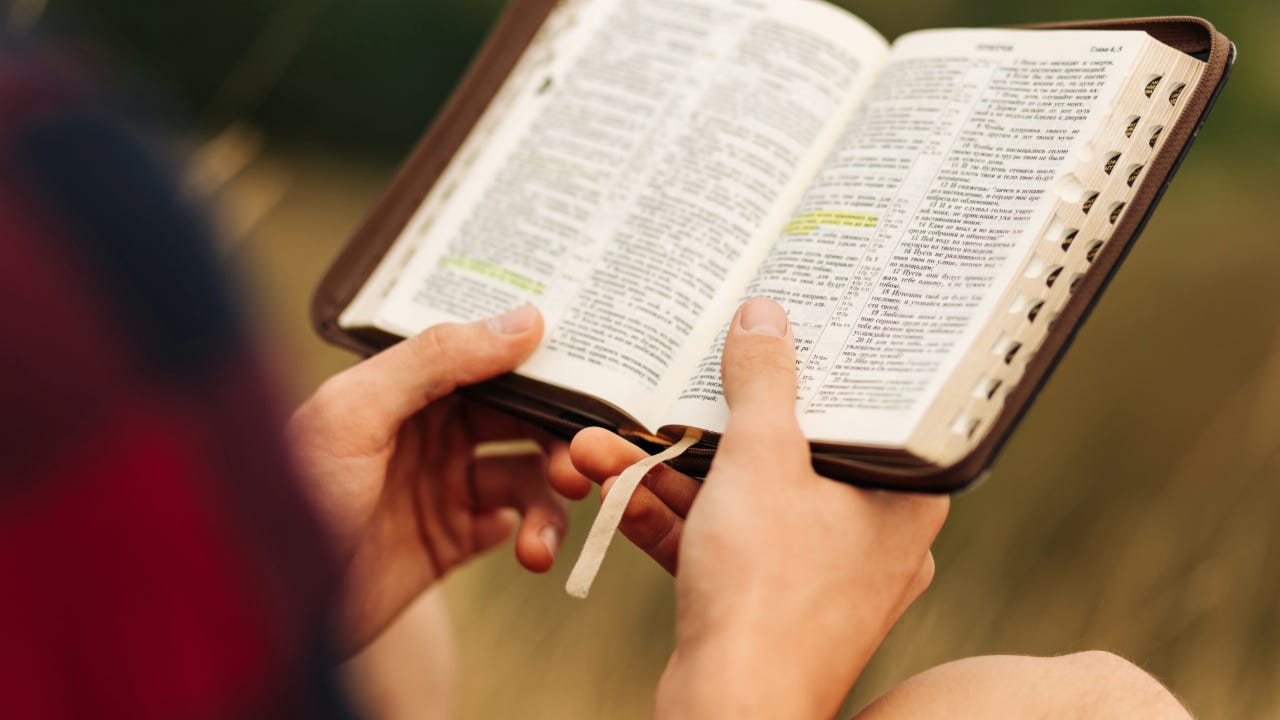
While conservatives claim this isn’t about indoctrination, the message is clear: Texas thinks Christianity is the only religion that matters. As if we didn’t already know that when the same lawmakers passed laws forcing the Ten Commandments to go up in every classroom and allowing schools to hire chaplains to counsel students. This is the same Board that approved a separate state-approved reading and language arts curriculum for public schools that was filled with biblical references (and errors).
And it’s not just me saying this. The people who advocated for the new reading list sure as hell saw this as a way to advertise Christianity:
Board member Brandon Hall during a news conference Thursday called the proposals a “generational opportunity” to overhaul the state curriculum.
“We’re going to stop watering down American history. We’re going to teach the truth. Our nation was founded as a Christian nation, and Texas is a Christian state,” said Hall, a Republican who is a pastor in Springtown. He said the Bible has had a “remarkable impact on our culture, our societies and our laws.”
…
“We don’t have to incorporate every religious belief in our history or in our literary works, because our nation was founded on Judeo-Christian values,” said Susan Perez, founder of a Christian parent advocacy group, Citizens for Education Reform, in a school board meeting Monday.
There’s a very good argument that could be made for teaching children about the Bible in the name of cultural literacy. Without knowing the story of Adam and Eve and the Garden of Eden, for example, you may miss out on a lot of references made in literature, art, and pop culture. But not every story in the Bible is relevant, even in that context. Furthermore, Texas is even using the Bible to teach otherwise generic lessons like humility and love. They’re also using the Bible as supportive material for other books, as if you can’t understand the Diary of Anne Frank or Elie Wiesel’s Night without knowing the Christian references.
The full list can be seen here. It includes:
1st Grade: Noah’s Ark by Peter Spier
2nd Grade: David and Goliath (excerpt from The Children’s Book of Heroes) by William J. Bennett (editor)
3rd Grade: ROAR! – Daniel and the Lion’s Den – Children’s Adapted Version by CBN [Christian Broadcasting Network]
4th Grade: The Necessity of Humility (Book of Luke, Chapter 14, Verses 7- 11) - New International Reader’s Version: New Testament
5th Grade: Moses (Book of Exodus, Chapter 3: The Burning Bush and Book of Exodus, Chapter 14: The Parting of the Red Sea) - New International Reader’s Version: Hebrew Bible/Old Testament
6th Grade: Do Not Be Anxious (Book of Matthew, Chapter 6, Verses 25- 34) English Standard Version: New Testament (This is included in lessons for All Creatures Great and Small by James Herriot)
7th Grade: The Shepherd's Psalm (Book of Psalms, Chapter 23) King James Version: Hebrew Bible/Old Testament (This is included in lessons for The Diary of a Young Girl by Anne Frank)
7th Grade: The Eight Beatitudes (Book of Matthew, Chapter 5 Verses 1- 12) King James Version: New Testament (This is included in lessons for The Outsiders by S. E. Hinton.)
8th Grade: To Everything There is a Season (Book of Ecclesiastes, Chapter 3) King James Version: Hebrew Bible/Old Testament (This is included in lessons for The Giver by Lois Lowry.)
8th Grade: Book of Lamentations, Chapter 3 Tanakh: Jewish Publication Society 1917 (This is included in lessons for Night by Elie Wiesel.)
9th Grade: Parable of the Prodigal Son (Book of Luke, Chapter 15, Verses 11-32) English Standard Translation: New Testament (This is included in lessons for Great Expectations by Charles Dickens.)
10th Grade: The Book of Job (Book of Job, Chapters 1-7,11,14,19,28,38-42) New International Reader’s Version: Hebrew Bible/Old Testament (This is included in lessons for Dante’s Inferno.)
11th Grade: Adam and Eve (Book of Genesis, Chapters 2 and 3 New International Reader’s Version: Hebrew Bible/Old Testament (This is included in lessons for The Scarlet Letter by Nathaniel Hawthorne.)
12th Grade: The Definition of Love (Book of 1 Corinthians, Chapter 13) English Standard Version: New Testament (This is included in lessons for Pride and Prejudice by Jane Austen.)
Educators will now have a few years to work the new material into their lessons:
On Friday, board members decided to stagger implementation of the reading list: elementary school students will see the new standards in the 2030-31 school year, sixth graders in the 2031-32 school year, seventh and eighth graders in the 2032-33 school year, and high school students in the 2033-34 school year.
Americans United for Separation of Church and State said this was an effort “to misuse public schools to impose one narrow set of religious beliefs and indoctrinate a new generation of Americans in the lie that America is a Christian country.” The Freedom From Religion Foundation was even more blunt:
A required reading list that overwhelmingly favors Christian texts while excluding the writings and literary traditions of other faiths, not to mention the perspectives of millions of nonreligious Americans, sends an unmistakable message about who belongs and who does not.
… compelling every student to read a curated selection of bible passages and Christian parables, while giving little or no comparable treatment to other traditions, crosses the line from education into religious promotion.
The question now is whether all this will be taught objectively. Will Christian teachers in public schools be able to resist the temptation to tell kids these stories reflect reality? What happens to students whose parents don’t want them to receive religious lessons? Keep in mind that, because these readings are required, they could also be seen on standardized tests, which means students who aren’t familiar with them could see that reflected in their scores.
Even beyond the biblical infusion here, this required list hamstrings the ability of teachers and school districts to decide what materials their students should read. If they’re forced to teach certain books, it limits their ability to include anything beyond that. The focus on certain “classic” books is also drawing scrutiny because of the lack of diversity in authors and lack of contemporary novels on the list.
There may be a silver lining to all this, though, as noted by a Catholic priest on CNN:
“And, you know, as a priest, I have to tell you… forced scripture doesn’t deepen faith. I think it breeds resentment when the state and not a family or a teacher decides which Bible passages children must read, I think something sacred’s been handed to politics,” he continued.
Anytime you force kids to read the Bible, some of them are going to realize the stories are fictional. They’re going to tell their friends. They’re going to ask the teachers uncomfortable questions. There’s no greater tool for atheism than the Bible. That doesn’t make what they’re doing in Texas okay, but they clearly haven’t thought this one through.
And what happens if teachers tell students these stories are fictional? Or incorporate additional material, like Greek mythology, to reinforce the lessons? There are going to be Christian parents who don’t like how these lessons are taught.
There will inevitably be lawsuits, but I wouldn’t be surprised if they come from Bible-loving parents who don’t appreciate how public schools aren’t giving their holy book the deference they think it deserves.
And what happens if Texas, which is ranked 29th in the country when it comes to K-12 education (by one metric), gets worse after implementing this reading curriculum?
This is what it looks like, though, when right-wing activists use the government to elevate one religion—their religion—over all others. Texas isn’t just acknowledging that the Bible has influenced Western culture; it’s requiring kids to embrace Christianity in a way it’s denying all other faiths and traditions.
But once the Bible becomes just another piece of assigned text, it loses the aura of holiness. Students are going to have questions and some parents will surely regret that they’re asking their public school teachers instead of their pastors. Kids are going to notice contradictions. They’re going to read about a burning bush, and a talking snake, and God’s cruelty (with Job) and they’re going to realize this book they’ve been raised to revere is full of bullshit.
If conservatives think mandatory Bible reading will create more Christians, they haven’t been paying attention to what actually happens when young people are encouraged to read the book critically instead of devotionally.
That may be the greatest failure of this entire stunt. Critics already have a few years to put together material to contextualize the Bible lessons in a way Christians aren’t going to like. The fact that we’re even having this conversation is a sign of failure. After all, if your religion has to be propped up by state mandates, it’s an admission your religion can’t survive on its own.
Congratulations, Texas, you just invited a shit-ton of lawsuits on your government and boards of education. Time and taxpayer money will be WASTED, rather than used to properly educate Texas school children.
Play stupid games, win stupid prizes!
𝑊ℎ𝑖𝑙𝑒 𝑐𝑜𝑛𝑠𝑒𝑟𝑣𝑎𝑡𝑖𝑣𝑒𝑠 𝑐𝑙𝑎𝑖𝑚 𝑡ℎ𝑖𝑠 𝑖𝑠𝑛’𝑡 𝑎𝑏𝑜𝑢𝑡 𝑖𝑛𝑑𝑜𝑐𝑡𝑟𝑖𝑛𝑎𝑡𝑖𝑜𝑛, 𝑡ℎ𝑒 𝑚𝑒𝑠𝑠𝑎𝑔𝑒 𝑖𝑠 𝑐𝑙𝑒𝑎𝑟: 𝑇𝑒𝑥𝑎𝑠 𝑡ℎ𝑖𝑛𝑘𝑠 𝐶ℎ𝑟𝑖𝑠𝑡𝑖𝑎𝑛𝑖𝑡𝑦 𝑖𝑠 𝑡ℎ𝑒 𝑜𝑛𝑙𝑦 𝑟𝑒𝑙𝑖𝑔𝑖𝑜𝑛 𝑡ℎ𝑎𝑡 𝑚𝑎𝑡𝑡𝑒𝑟𝑠.
Lying liars for Jesus lying again.
“𝑊𝑒’𝑟𝑒 𝑔𝑜𝑖𝑛𝑔 𝑡𝑜 𝑠𝑡𝑜𝑝 𝑤𝑎𝑡𝑒𝑟𝑖𝑛𝑔 𝑑𝑜𝑤𝑛 𝐴𝑚𝑒𝑟𝑖𝑐𝑎𝑛 ℎ𝑖𝑠𝑡𝑜𝑟𝑦. 𝑊𝑒’𝑟𝑒 𝑔𝑜𝑖𝑛𝑔 𝑡𝑜 𝑡𝑒𝑎𝑐ℎ 𝑡ℎ𝑒 𝑡𝑟𝑢𝑡ℎ. 𝑂𝑢𝑟 𝑛𝑎𝑡𝑖𝑜𝑛 𝑤𝑎𝑠 𝑓𝑜𝑢𝑛𝑑𝑒𝑑 𝑎𝑠 𝑎 𝐶ℎ𝑟𝑖𝑠𝑡𝑖𝑎𝑛 𝑛𝑎𝑡𝑖𝑜𝑛, 𝑎𝑛𝑑 𝑇𝑒𝑥𝑎𝑠 𝑖𝑠 𝑎 𝐶ℎ𝑟𝑖𝑠𝑡𝑖𝑎𝑛 𝑠𝑡𝑎𝑡𝑒.”
Thre sentences, three lies. Stop watering down American history? Denying other religious beliefs and omitting the bad parts is the opposite. Teaching the truth? That's a lie made obvious by the very next sentence. The United States founded as a Christian nation? Messrs Jefferson and Madison would like a word. Texas a Christian state? No matter what their state government says, they are still subject to the First Amendment.
Have the lawsuits been filed yet, or are AU, American Atheists, and the FFRF waiting until the first Bible lesson is taught?