
This newsletter is free and goes out to over 26,000 subscribers, but it’s only able to sustain itself due to the support I receive from a small percentage of regular readers. Would you please consider becoming one of those supporters? You can subscribe via Patreon or the Subscribe button below! You can also make one-time donations through Venmo, CashApp, or PayPal.
Imagine serving your time in prison and being released on parole, only to be told that your freedom depends on you regularly attending a religious gathering.
That was the case in Colorado, where certain parolees were required to attend meetings for Alcoholics Anonymous or Narcotics Anonymous as a condition of their release.
It’s not that those groups are “Christian,” per se, but both use the infamous “Twelve Steps” program, and several steps reference giving yourself over to a “higher power,” even if that’s not defined. Meetings may also involve reciting the Lord’s Prayer and the Serenity Prayer. While all of that works for many people who have gone through the programs, not everyone is eager to consider a metaphorical “higher power.” In recent decades, secular alternatives have sprung up for that exact reason.
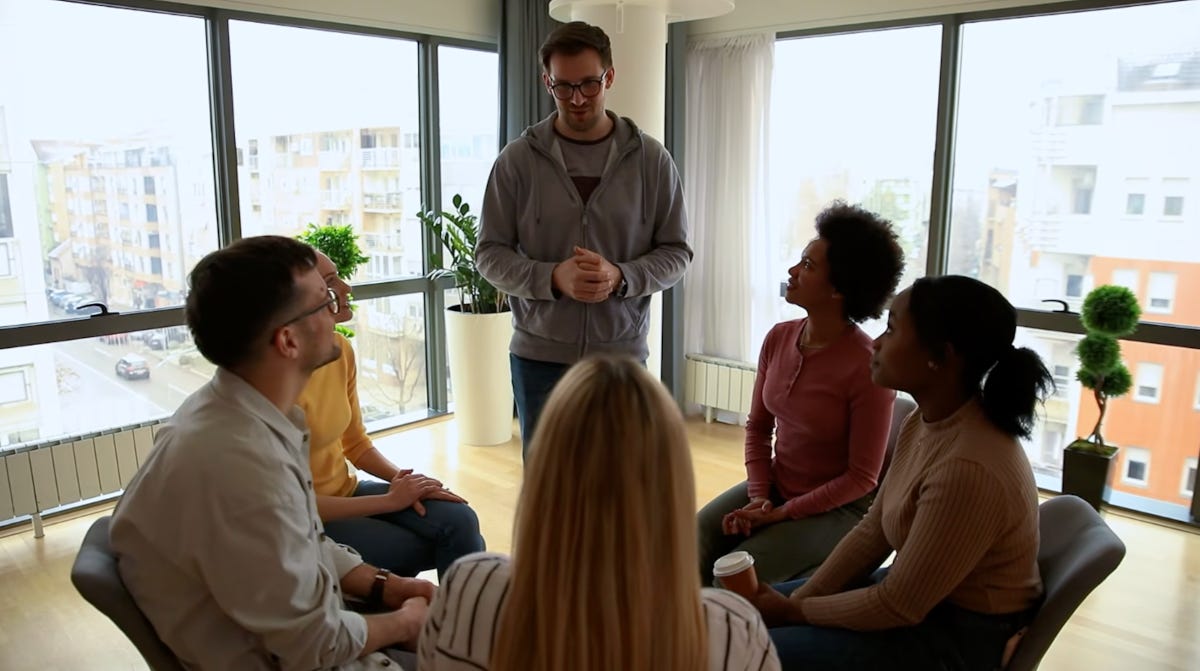
The problem is that government officials don’t always take those alternatives seriously.
Federal courts have said religious requirements (like twelve-step programs) for parole are unconstitutional but many states still have them in place. As American Atheists notes, one concern from parolees is that any kind of pushback on their part could be seen as disobedience—and a ticket back to prison. They shouldn’t need a lawyer to find a secular alternative to those programs.
But after advocacy from American Atheists and their Colorado Secular Advocacy Team, the Colorado Department of Corrections has agreed that parolees who struggle with alcohol or drug issues will not be required to join those religious groups. Alternatives will be provided for them.
Effective immediately, the Department of Corrections will end the twelve-step mandate, with the parole board instead referring parolees to “peer support networks,” which include secular programs such as SMART Recovery and LifeRing, instead of requiring AA, NA, or any other twelve-step program.
In addition, the Department will improve access, transparency, and disclosure for parolees who are required to participate in sober housing programs as a condition of release. Under the changes, all applications for providers must disclose any faith-based requirements and any parolee whose sober housing program conflicts with religious or nonreligious beliefs will be informed of alternative placement options and referred to them. And to address access gaps, parolees who want to attend a secular peer support program but do not have a group nearby will have a telehealth option available instead.
It’s such a simple fix and yet it’s a long time coming. Incredibly, this didn’t even require legislation forcing them to make the changes. The CDOC did it on their own, after lobbying from people who care about the issue. It’s the culmination of years of work that brought together advocates, non-profits, and government officials.
“We believe no one should be forced into a religious twelve-step program. And today, I’m proud that the state of Colorado agrees,” said Sheryl Kallivrousis, co-chair of the Colorado Secular Advocacy Team. “The Secular Advocacy Team, backed by American Atheists and with the help of Rep. Lori Goldstein (D–District 29), brought the Department of Corrections to the table, and we got this done.”
“This didn’t happen overnight. Our team spent several years building relationships with Legislators and key stakeholders. This is how organizing works, and it’s how we protect people with the least power to say no. Parole is checked off our list, but we’re not done. Probation is next. I hope Colorado is the model for organizers in every state,” added Kallivrousis.
When I spoke to Victoria Anderson, American Atheists’ State Policy Specialist, she stressed the importance of coalition building when explaining how they were able to make this happen. This wasn’t just atheists pushing for the change; they also had support from groups like the Colorado Alternative Defense Counsel and Interfaith Alliance of Colorado.
The next step is to make this happen in other states. In 2022, for example, there was a bipartisan push in New York to make sure drug court participants were informed by a judge about their right to choose a non-religious form of rehabilitation. But Gov. Kathy Hochul vetoed it, claiming it would be a burden on judges. In other words, even in blue states, this will require more pressure and lobbying.
There hasn’t been any paperwork or revised policies released by the Colorado Department of Corrections just yet, but American Atheists said the CDOC agreed in principle to the changes and will begin implementing them immediately. It’s a huge step in the right direction.
𝑇ℎ𝑒 𝑝𝑟𝑜𝑏𝑙𝑒𝑚 𝑖𝑠 𝑡ℎ𝑎𝑡 𝑔𝑜𝑣𝑒𝑟𝑛𝑚𝑒𝑛𝑡 𝑜𝑓𝑓𝑖𝑐𝑖𝑎𝑙𝑠 𝑑𝑜𝑛’𝑡 𝑎𝑙𝑤𝑎𝑦𝑠 𝑡𝑎𝑘𝑒 𝑡ℎ𝑜𝑠𝑒 𝑎𝑙𝑡𝑒𝑟𝑛𝑎𝑡𝑖𝑣𝑒𝑠 𝑠𝑒𝑟𝑖𝑜𝑢𝑠𝑙𝑦.
Can you say Christian Fucking Privilege? I knew you could.
Good for Colorado for doing the right thing without being told to by courts or the legislature. They actually listened to the people who are affected and made the appropriate changes. CDOC is a model for the rest of the country.
A Vietnam buddy I hear from on a regular basis made a real run at drinking himself to death after he got out of the Army. He's been sober now for over thirty-five years. He is very active in AA and credits the organization with saving his life in spite of the fact he's not the least bit religious. He freely admits AA has a high failure rate but as he says, "You get out of it what you put into it." He went on to have a very successful career and is comfortably well-off and enjoying life today.