
This newsletter is free and goes out to over 23,000 subscribers, but it’s only able to sustain itself due to the support I receive from a small percentage of regular readers. Would you please consider becoming one of those supporters? You can use the button below to subscribe or use my usual Patreon page!
On May 1 last year, the same day as the conservative Christian “National Day of Prayer,” Donald Trump signed an executive order establishing the “Religious Liberty Commission.” The group was formed to “offer diverse perspectives on how the Federal Government can defend religious liberty for all Americans” and they really only had two jobs:
The Commission shall produce a comprehensive report on the foundations of religious liberty in America, the impact of religious liberty on American society, current threats to domestic religious liberty, strategies to preserve and enhance religious liberty protections for future generations, and programs to increase awareness of and celebrate America’s peaceful religious pluralism…
…
The Commission shall advise the White House Faith Office and the Domestic Policy Council on religious liberty policies of the United States…
Was it all symbolic? Sure. But it could be useful if experts on the subject were coming together to offer the administration a guide on how to overcome serious obstacles to religious liberty.
It’s also important to note that the Federal Advisory Committee Act (FACA) of 1972—passed to counter corruption—said that any commission like this one had to be transparent, balanced in terms of ideological makeup, and structured to avoid inappropriate influence by special interests.
But according to a lawsuit filed this week by a coalition of religious organizations, the Religious Liberty Commission has violated FACA many times over.
That’s the main allegation from the Interfaith Alliance, Muslims For Progressive Values, Sikh American Legal Defense and Education Fund, and Hindus For Human Rights, all represented by lawyers working with Americans United for Separation of Church and State.
For example, when it comes to ideological balance, the commission consists of 13 conservative Christians—including former beauty pageant contestant Carrie Prejean Boller, evangelist Franklin Graham, Dr. Phil (for some reason), and evangelical conspiracy theorist Eric Metaxas—and a token orthodox Jew.
The Commission’s membership is far from fairly balanced because it does not represent religious communities aside from Christianity and Judaism. In remarks made to the Commission, Defendant Trump has articulated a commitment to protect what he describes as “the Judeo-Christian principles of our founding.”16 The Commission’s imbalanced membership reflects a narrow conception of which religious principles, and whose rights, are worth protecting…
…
Of the Commission’s members, none are members of a religion that does not fit within Defendant Trump’s “Judeo-Christian” framework. For example, the Commission includes no adherents or representatives of Islam, Hinduism, or Sikhism, several of the most common religions in the United States behind Christianity and Judaism.
Those members, the lawsuit says, are also not ideologically different. They’re all basically Christian Nationalists who support “maximal protection for the exercise of Judeo-Christian religious beliefs without consideration for the rights and beliefs of others” and who oppose the principle of church/state separation.
One way to counter this argument would be to show that various perspectives have been considered at the commission’s meetings. But the first several meetings were held at the right-wing Museum of the Bible in Washington, D.C. and all they ever seem to talk about is how amazing Christianity is.
During the first meeting, the Commission focused on the historical tradition of Christianity in the United States. Members of the Commission discussed how Christian faith shaped the nation’s understanding of “freedom, law and human dignity” and quoted a statement that the nation should “prefer Christians for [our] rulers.”
The Commission opened the September 8 meeting with a Christian prayer and closed the September 29 hearing with a specifically Christian prayer “in Jesus’ name.”
The lawsuit says the group hasn’t been transparent either. Sure, they’ve posted their meetings on YouTube, but that’s about it.
FACA requires Defendants to make available, in advance of the public meetings where their content will be relevant, “the records, reports, transcripts, minutes, appendixes, working papers, drafts, studies, agenda, [and] other documents . . . made available to or prepared for or by” the Commission...
Defendants did not provide advance notice of witness lists or other documents made available to the Commission in advance of these meetings.
Defendants did not provide agendas for the meetings in advance.
Defendants have also not produced complete transcripts for the September 8, September 29, or December 10, 2025 meetings. Defendants also appear to have edited the videos for at least one meeting and posted incomplete video on their website.
None of the witness statements made to the Commission have been made publicly available in written form.
Detailed meeting minutes for the meetings have not been made publicly available.
The Plaintiffs say all of this has made their own work harder because they can’t “divert resources” to push back against what’s being done when they don’t know what’s being done. And given the opaqueness of the group, it seems likely that the eventual report this commission will release will ”inflict further harm on Plaintiffs.”
Among other things, the lawsuit calls on the court to declare that the commission has violated FACA, force the commission “to employ good faith efforts” to balance their ideological makeup, include a disclaimer on any future report that it was produced in violation of the law, and make them release the information they’re required to produce but has refused to up to this point.
“Religious freedom for some is religious freedom for none,” said Rev. Paul Brandeis Raushenbush, president and CEO of Interfaith Alliance. “The government has no right to pick and choose which religious beliefs to promote, and which to marginalize. The Trump administration has failed to uphold our country’s proud religious freedom tradition, and we will hold them accountable. Today’s lawsuit is our recommitment to fight for religious liberty for all with every tool available to us.”
…
“The Religious Liberty Commission isn’t about protecting religious liberty for all; it’s about rejecting our nation’s religious diversity and prioritizing one narrow set of conservative ‘Judeo-Christian’ beliefs,” said Rachel Laser, president and CEO of Americans United. “The commission’s public meetings – most of which have been held at the Museum of the Bible and have been dominated by a very specific brand of Christian faith, Christian prayers, and predominantly Christian speakers – are a vivid example of this favoritism. The commission’s true purpose and operations can’t be squared with America’s constitutional promise of church-state separation.”
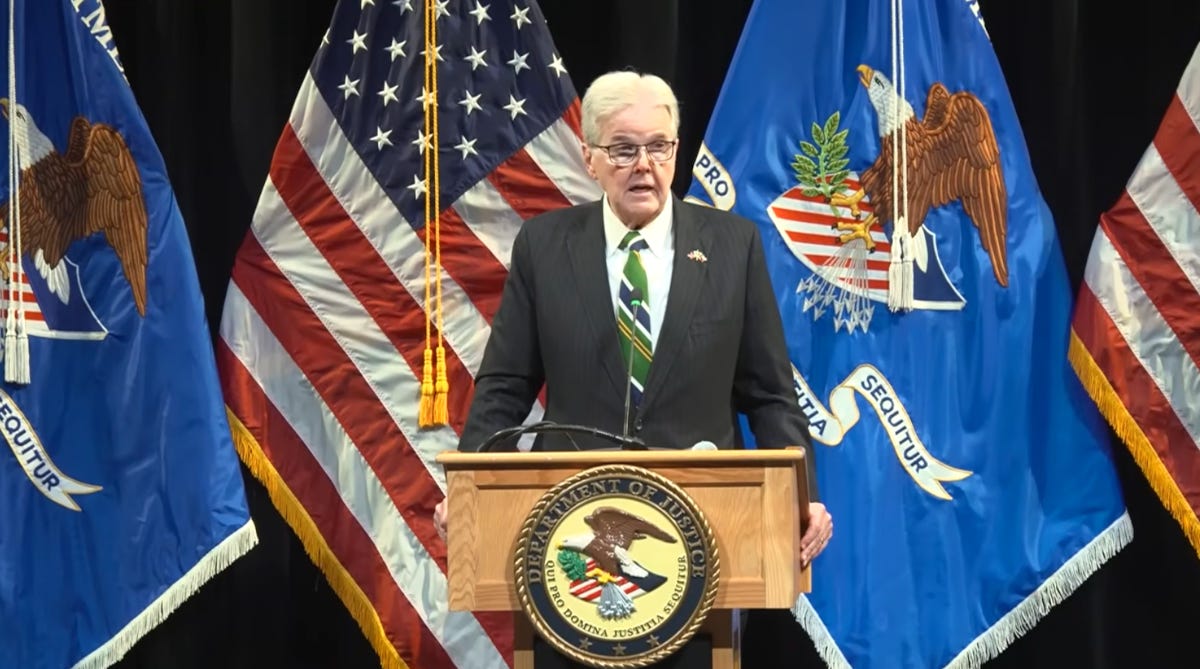
After the lawsuit was filed on Monday, the Department of Justice naturally defended their actions without addressing any of the substantive criticisms:
“Through the Religious Liberty Commission’s hearings, President Trump has created opportunities for Americans from all walks of life to share their testimonies, concerns, and recommendations to better support Civil Rights and religious freedom in the United States,” the agency spokesperson said a statement. “The Department of Justice’s mission is to uphold the rule of law and ensure fair and impartial justice for all Americans, which is an endeavor every American should support regardless of their political beliefs.”
That… means absolutely nothing. In no way are outsiders to the Christian club invited to share their thoughts in any meaningful way because the members of the group are already predisposed to ignore people who don’t believe as they do.
It’s almost incredible how badly the Trump administration has botched this. They could easily put together a diverse group to advise the president—allowing people to think they respect religious diversity—then just ignore their recommendations entirely. But this administration isn’t even politically strategic like that. They invited their friends to the club and ignored even the bare minimum list of things they legally need to do, as if to show how no one can stop them from adhering to the law. If you’re a conservative Christian, they let you do it.
This isn’t just some technical failure of process on the Trump administration’s part. It’s a moral and constitutional failure by Chair Dan Patrick, Attorney General Pam Bondi, and everyone else involved in this sham commission. The goal was never to protect religious freedom but to promote one specific brand of religion.
By stacking the commission with conservative Christians and one (1) ideologically aligned outlier, the administration took a mandate for pluralism and turned it into a vehicle for exclusion. The imbalance isn’t an accident; it’s by design.
That matters because the conservative Christians in this “religious liberty” group get to define whose liberty counts. By effectively shunning non-Christians and even progressive Christians from the group, they can pretend that the government’s position matches their own.
No wonder, then, that they want as little information about these meetings leaking out ahead of time. It’s a lot easier to advance your agenda when the other side is unaware of what you’re planning. FACA exists precisely to prevent this kind of corruption. By withholding agendas, transcripts, witness statements, and unedited records, the commission has insulated itself from scrutiny while shaping a report that could influence policy nationwide.
If the Religious Liberty Commission is allowed to continue as is, the precedent becomes clear: Whoever has access to power gets to redefine religious liberty in a way that advances their beliefs while screwing over everyone else’s. If religious freedom doesn’t belong to everyone, it belongs to no one.
“The Department of Justice’s mission is to uphold the rule of law and ensure fair and impartial justice for all Americans"
Well, it used to be their mission. Now it's mission is whatever the Pedodent wants them to do, no matter how illegal and unconstitutional it is. When the entire barrel of Nazis are thrown out of power, there needs to be actual justice in the form of prison for all of them, starting at the top.
I suggest that the reason this commission never provides legally required information is because it isn't a legitimate commission. This was nothing more than shameless pandering by Trump to Christian Nationalists in order to secure the evangelical vote. Trump doesn't care about religion and doesn't have any interest in religious plurality. He wants the unconditional support of a major voting bloc. It's all transactional - he's throwing them a bone so they'll provide support for Republican elections.