
This newsletter is free and goes out to over 24,000 subscribers, but it’s only able to sustain itself due to the support I receive from a small percentage of regular readers. Would you please consider becoming one of those supporters? You can subscribe via Patreon or the Subscribe button below! You can also make one-time donations through Venmo or PayPal.
Here’s an amusing dilemma for politicians everywhere: As more Americans ditch organized religion, campaign firms are finding it harder and more expensive to reach large blocs of voters in a single swoop.
This is excellent news for those of us who care about having an informed electorate instead of one dominated by gullible religious rubes who fall for bottom-of-the-barrel candidates who manage to get elected just by talking about how much they love God.
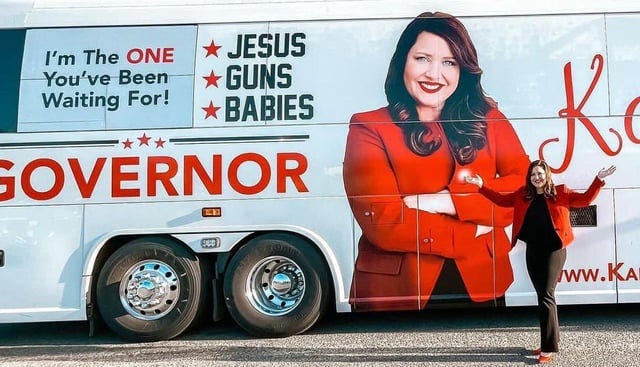
All of this is according to the campaign firm TriStrategies, as relayed to Axios, which ran the headline “Campaigns pay the price for America’s secular shift”:
Campaigns spent about $1.40 per nonreligious voter versus roughly 45 cents per religiously affiliated voter in 2024, Sisto Abeyta, a Democratic consultant with the Nevada-based firm TriStrategies, tells Axios.
Candidates can reach through existing mailing lists or megachurch coffee shops, Abeyta said. Nonreligious voters, however, have to be sought.
“For religious voters, all I have to do is send a mailer and say I believe in God and apple pie,” Abeyta said. “For nonreligious voters, I need to send a list of issues with links so they can verify and be ready for questions. It’s time-consuming and costs more.”
They make it sound like it’s a bad thing to tell voters where candidates actually stand on the issues. Yes, it’s more expensive to do that at first, at least if you’re not used to it, but the alternative is cheap religious bullshit that ruins our country. It’s morbidly funny how Abeyta seems to openly long for the good old days when campaigns could just tell megachurches their candidates love God and be done with it. But now they have to (gasp) do the work of actually informing voters what these candidates believe about various issues because those damn non-religious voters dig into the details unlike churchgoers who aren’t interested in facts.
That says a lot about how easy it is to manipulate religious people.
Honestly, you should be ashamed of your faith if this is how a campaign firm talks about you.
But it’s also not a permanent problem because reaching non-religious voters isn’t all that different from reaching all voters, especially these days as people become more isolated and less likely to be part of any civic/social/in-person groups. You just have to know how information spreads.
Voters respond to candidates who articulate clear priorities, defend their positions under scrutiny, and communicate like actual human beings instead of focus-grouped robots. That’s why politicians like Zohran Mamdani were able to generate enormous organic support online: people understood what he was fighting for, and supporters became unpaid amplifiers for his message. The amount of earned media he received was every campaign manager’s dream.
Or you can just pander to us for once. Steven Emmert, executive director of the Secular Coalition for America, offered that simple solution:
Emmert argues that secular voters are often highly engaged and quick to respond when candidates simply acknowledge them.
That could be as easy as just saying that, if elected, you will represent people who are religious and non-religious.
But in the long term, the best (and eventually cheapest) way to reach non-religious voters is to have candidates who actually stand for church/state separation, and (actual) religious freedom, and against Christian Nationalism. You know, principles that most decent people can rally behind.
If your campaign can’t survive without hiding behind generic references to God and patriotism, the problem isn’t the cost of reaching secular voters. It’s that your candidate has nothing compelling to say. If all you care about is God, you shouldn’t be running for public office, period. That may have worked in the past, but thank goodness more of the country is less interested in thoughtless candidates like that.
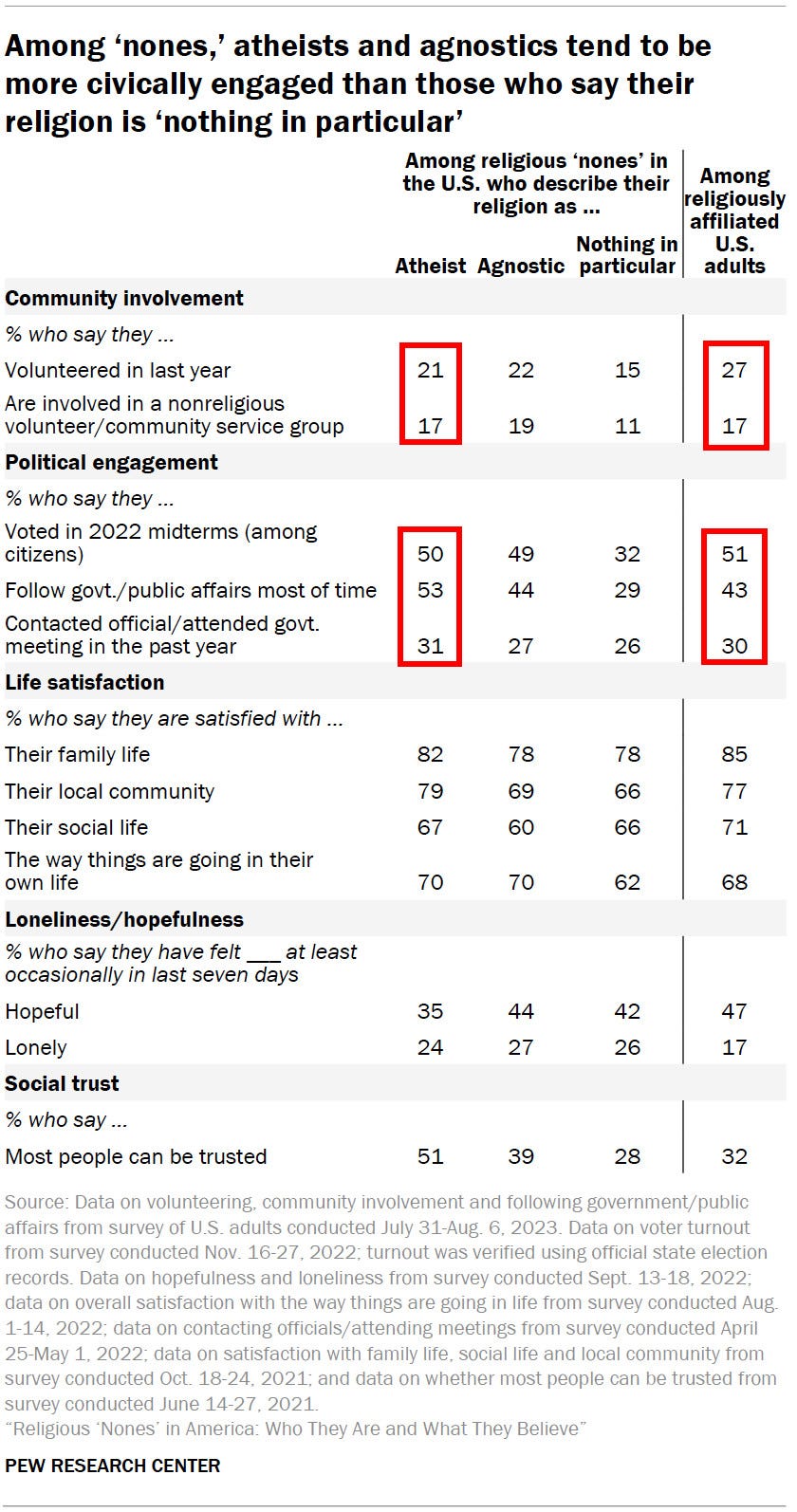
If anything, we’re worth the investment. Non-religious voters are deeply interested in politics, according to a Pew Research Center analysis from 2024. (“Nones” as a whole are, by nature, wishy-washy, but that’s true about everything in their lives.) If you ever did get explicitly non-religious voters activated, they would be just as committed—if not more committed—than religious voters when it comes to voting and caring about politics.
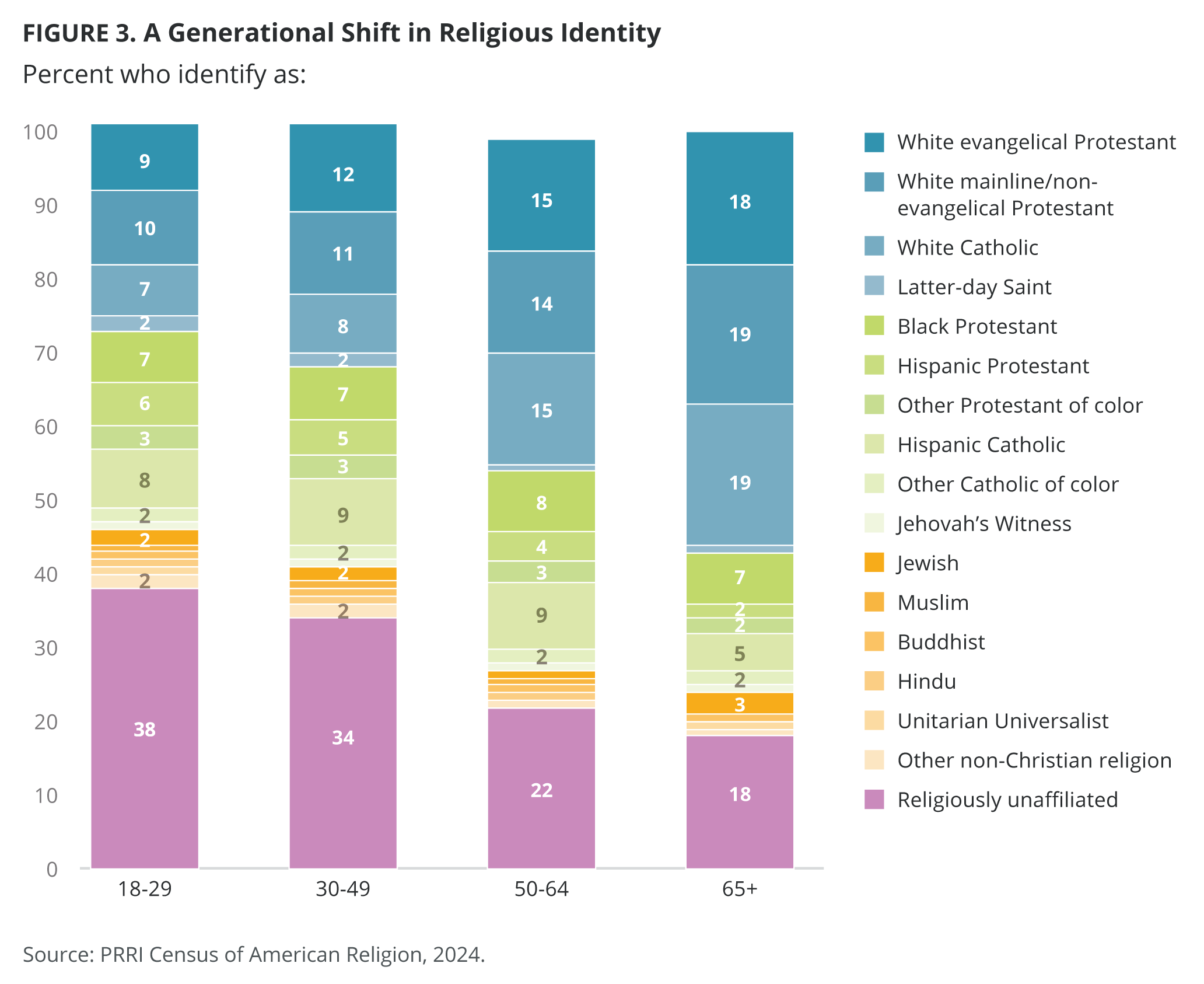
Keep in mind that 38% of younger voters (the under-30 crowd) are not affiliated with any organized religion, and over a third of Democratic-leaning voters are non-religious. So what if it costs a little more to find us? We’re your base. You need us.
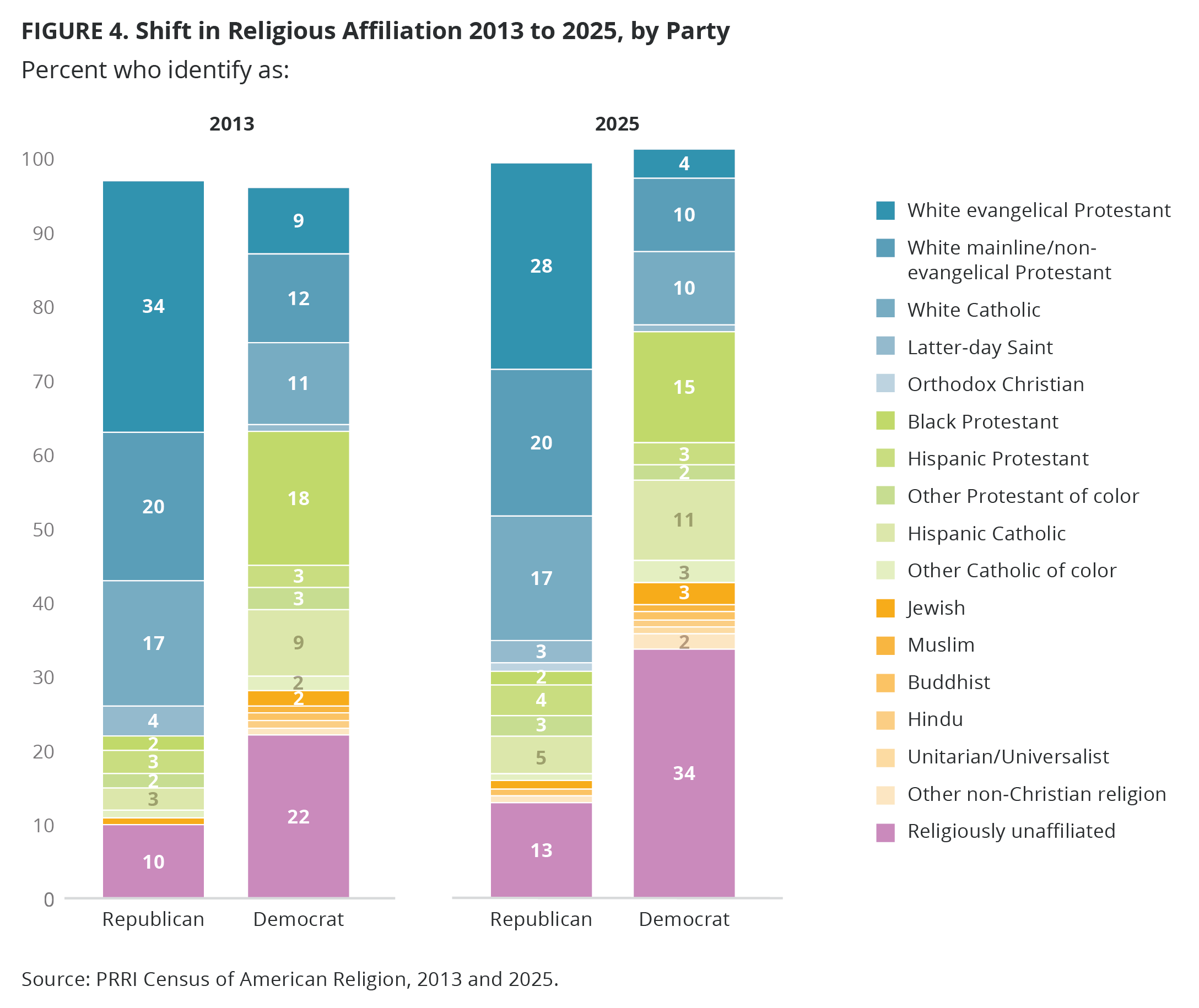
The party that can unite non-religious voters under an umbrella of decent principles is in the best position for the future—and Democrats have the advantage if they ever cared to capitalize on it.
Not being able to reach out to a megachurch mailing list doesn’t mean you can’t reach voters in a cost-effective way. It just means you have to focus on actual ideas instead of putting the word “God” over pictures of your candidate and assuming that’ll do the trick. And if that’s too difficult to do, maybe your candidate shouldn’t have been running in the first place.
While I understand that campaigns cost money and campaign firms always want to stretch their dollars, no one should be praying for more races like that of Sen. Tommy Tuberville, where religion, football, and MAGA cultism are enough to convince Republicans to vote against their best interests.
The fact is it’s not that hard to court non-religious voters. All you have to do is put substance over symbolism. We want candidates who can defend their positions under scrutiny and who can articulate how their ideas will improve our lives. We don’t want vague moral platitudes and idiotic culture wars. Campaign firms should be thrilled that secular voters ask questions and expect receipts because, if they have good candidates, it shouldn’t be hard to deliver on those expectations.
All we’re losing here is a cynical shortcut that never should have had a place in American politics.
Politicians, especially Republicans, have long relied on churches as voting blocs because they know those voters don’t ask tough questions or demand results. It doesn’t take a lot to appeal to religious zealots—the right code-words, an endorsement from the pastor, or some vague appeals to God do the trick. And we’ve all suffered because of that kind of ignorance.
The fact that fewer Americans are willing to treat religion as a substitute for virtue is a huge step in the right direction.
Candidates should have to persuade people and survive fact-checking, skepticism, and follow-up questions. If campaigns are frustrated that they’ll have to do a little more work or spend a little more money to satisfy those boxes, too damn bad. The real scandal here is how so many campaigns have become dependent on voters who demand so little in return.
People all across the free-thought spectrum tend not to be herd animals, and thus more difficult to reach. The evangelical crowd just lines up to be told what to think and believe. Most of them never realize they're the ones being had.
So much for religion making one a better person.