
This newsletter is free and goes out to over 26,000 subscribers, but it’s only able to sustain itself due to the support I receive from a small percentage of regular readers. Would you please consider becoming one of those supporters? You can subscribe via Patreon or the Subscribe button below! You can also make one-time donations through Venmo, CashApp, or PayPal.
I’ve posted before about how The Church of Jesus Christ of Latter-day Saints is suing one of its most prominent critics, podcast host John Dehlin, on grounds of trademark and copyright infringement… as if listeners to his show might be confused between the podcast and the Mormon Church itself.
But there was just an update to the case that made me laugh out loud because it shows just how weak the case against Dehlin is.
A quick recap: Dehlin began the Mormon Stories Podcast in 2005 when he was questioning whether or not to leave the LDS Church. It soon became a haven for other critics and former Mormons—and a landing space for listeners who harbored the same doubts but knew the Mormon Church wasn’t a safe place to get their questions answered in a meaningful way.
In 2015, Dehlin was officially kicked out of the Church for the “crime” of apostasy—he was accused of leading people away from the Church—though Dehlin argued the real reason was because he openly and proudly supported same-sex marriage and the ordination of female priests.
This past April, the Mormon Church (and its intellectual property holding company) sued Dehlin and the Open Stories Foundation, arguing (among other things) that he had no right to use the title “Mormon Stories” for his podcast or their copyrighted images in his thumbnails. They said he used the Church’s trademarks and copyrighted materials to promote his show and “will continue to cause individuals to be confused” if a court doesn’t intervene. (Dehlin’s team has already filed a legal response.)
I’ve written at length about why this is a ridiculous argument. But perhaps the most obvious defense of Dehlin is the fact that others have used the word “Mormon” to push criticism of the faith, and the Church never went after them. The Broadway musical “The Book of Mormon,” for example, might confuse outsiders who don’t know any better, but the Church didn’t fight that battle in court. (If anything, they used it to their advantage.) The Church never sued Hulu over “The Secret Lives of Mormon Wives.”
The Church’s response to all this has been that no one is confusing those shows for the real thing. But people are getting confused—and will continue to be confused—by Dehlin’s show, wrongly believing it’s an extension of the LDS Church, and that’s why he needs to be sued.
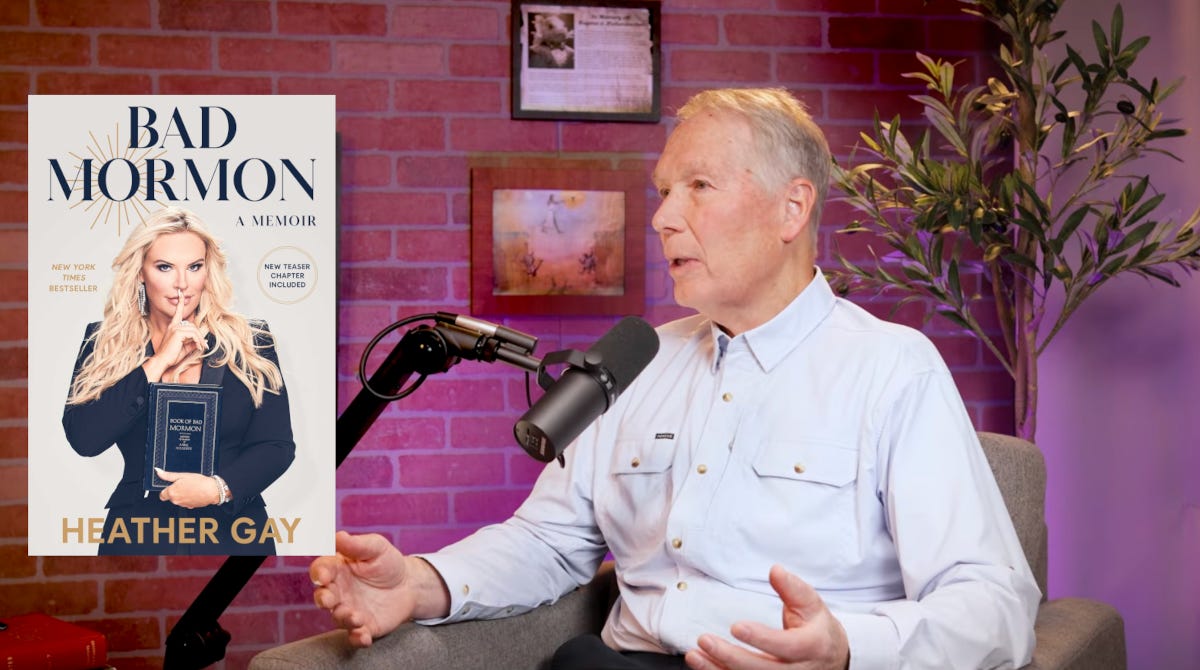
Days after Dehlin’s team filed their response, an attorney for the Mormon Church, David Jordan, appeared on a pro-Mormon podcast called Keystone. He explained to host David Snell why the lawsuit was justified despite all the bad publicity the Church has received. And he attempted to show why Dehlin was not the same as other people who use the word “Mormon” to promote their products or shows.
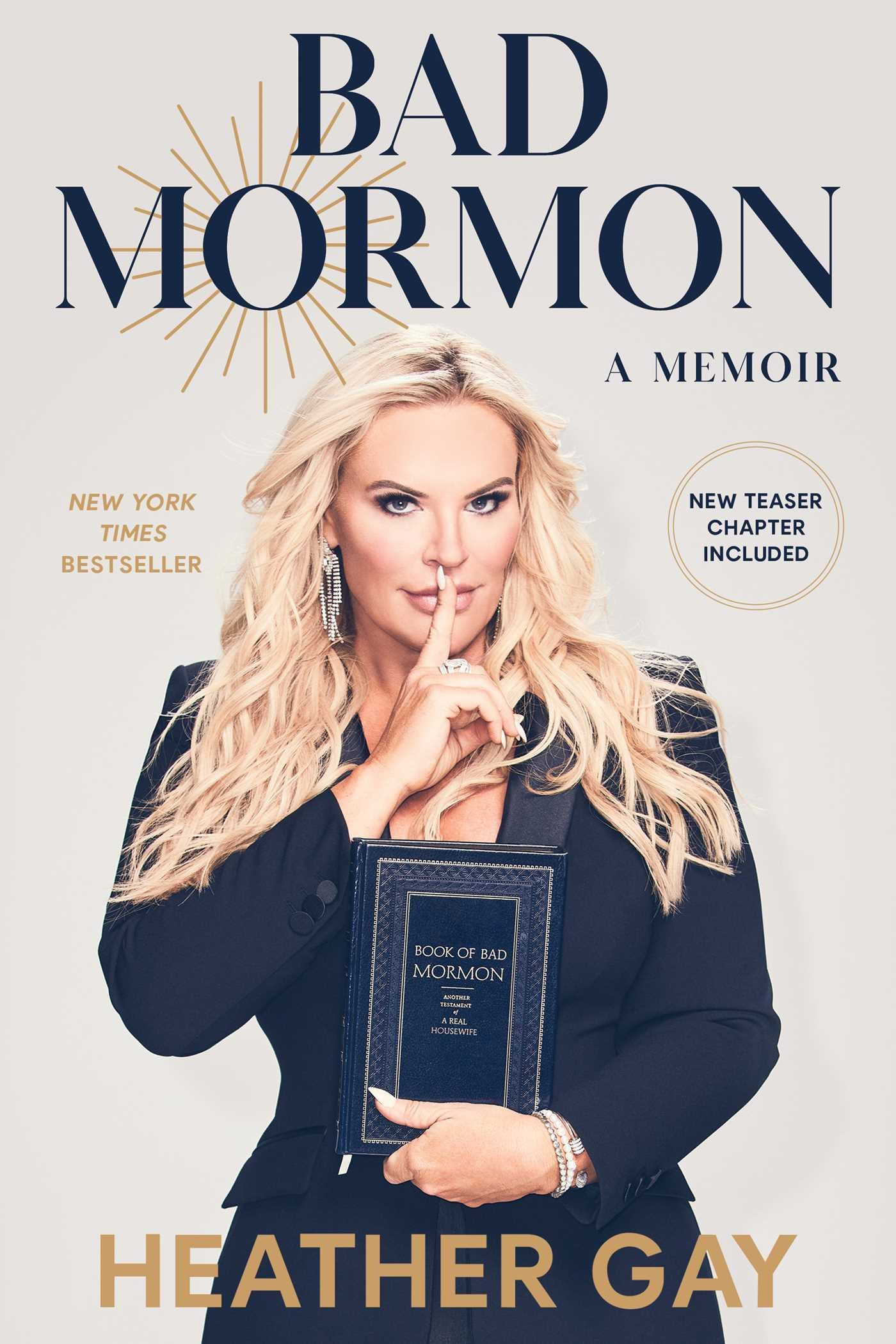
For example, it’s not like the Church went after the memoir Bad Mormon (affiliate link) by The Real Housewives of Salt Lake City star Heather Gay, because no one would ever think that was a product of the Church.
DAVID SNELL: What evidence of actual brand confusion has your team been able to uncover?
DAVID JORDAN: So certainly we’ve had comments from multiple people over the years leading up to this litigation where they’ve reported to us, “I thought this was in some way affiliated with the church, somehow sponsored by the church.” And so there is that evidence of actual confusion.
In a trademark case, the standard is not: How much actual confusion can you actually show? It’s: What is the likelihood of confusion? That’s the standard in the law. So there is certainly evidence of actual confusion. But I think if people just use their common sense and they say [looking at the “Mormon Stories” logo], “Okay, I see this blue circle, it’s got these light rays in it, it has the word ‘Mormon Stories’ in it,” and the words Mormon Stories don’t suggest anything about non-affiliation. If anything, they suggest affiliation to just a common person seeing those words.
If you see the words “Bad Mormon,” you’re not thinking, “Oh, I bet that’s affiliated with the Church.”
Probably being too specific here, but if you see the word “Mormon.ish,” you’re probably not thinking, “I’ll bet that the Church chose that as an affiliated site.” No.
But if you see the words “Mormon Stories,” it might remind you of “Book of Mormon Stories,” or any other number of ways in which, historically, the word “Mormon” has been used. So it really is about likelihood of confusion.
There’s just one problem with that defense.
The Mormon Church absolutely went after Heather Gay in 2022 because they argued she had no right to use their trademark to sell merchandise. In their lawsuit against her company Heathertainment, Inc., they argued there would be a “likelihood of confusion” if people saw her products:
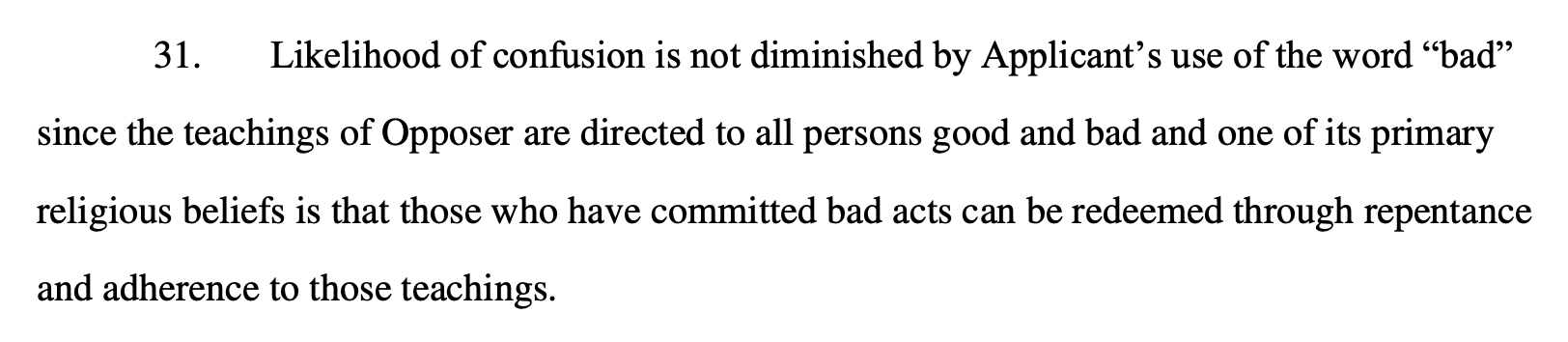
They also argued that her phrase “falsely suggests a connection” with the Church, was “deceptive,” and would “tarnish and denigrate” the reputation of the Mormon Church. That’s why they said the phrase needed to be denied by the U.S. Patent and Trademark Office. (Gay eventually withdrew her trademark application, preventing her from obtaining a federal trademark registration for the merch, but the lawsuit had no impact on the title and sales of her book.)
The point is: LDS Church attorney David Jordan claimed “Bad Mormon” was obviously okay—If you see the words “Bad Mormon,” you’re not thinking, “Oh, I bet that’s affiliated with the Church”—and that “common sense” would tell you that’s not connected with the Church. He went on to say that’s not the case for Dehlin’s podcast. But the Church’s treatment of “Bad Mormon” suggests that alleged confusion isn’t actually a consistent dividing line at all. Critics repeatedly become targets even when their lack of affiliation should be obvious.
And now Dehlin’s team has updated its response to the Church’s lawsuit to include this very example.
In a four-page supplement, they write:
… For a little more than a year, the Church’s aggressive enforcement efforts apparently wore Ms. Gay down and she ultimately capitulated and voluntarily abandoned her trademark application to resolve the matter.
The foregoing illustrates that even when the Church knows there is no infringement or likely confusion, as Mr. Jordan admits, the Church and its attorneys nonetheless intentionally misuse federal trademark law as a tool of coercion, wielding the burdensome process (rather than genuine merits) to compel changes and control how “Mormon” is used by others. Defendants present this evidence to emphasize the importance of their First Amendment defense as set forth in their Motion papers and to show that the Electronic Frontier Foundation’s concerns about “the coercive power of dubious trademark claims” is particularly salient here given the Church’s history of dubious enforcement.
They add in a footnote that the Church has also filed oppositions to trademark applications for “Mormon Whiskey,” “Mormons for the Devils,” “Mormonboyz,” and “Secret Mormon.” Was anyone seriously going to mistake those for Church-branded ventures? Apparently, according to the Church’s lawyers.
Dehlin’s team is including this supplement in their response in the hopes that it’ll convince a judge to toss out the case entirely. The ACLU of Utah and the Electronic Frontier Foundation have already filed amicus briefs in his defense, with EFF warning that trademark litigation can chill lawful criticism by forcing defendants to pay exorbitant legal fees.
I said this before, but if this is how the LDS Church treats a former insider who asks questions and builds community, imagine what it signals to current members who are quietly doubting. If you become too effective at articulating those doubts, the institution won’t just argue with you; it’ll try to silence you.
By picking this fight, the Mormon Church is only confirming the criticisms they’re so desperate to suppress.
(Portions of this article were published earlier)
It's interesting that an institution that portrays itself as a paragon of moral virtue, is also so insecure and thin skinned they need to sue people who criticize them. Wouldn't their supposed good works be enough to defend themselves with? Don't you find it a little ironic that a church would need a lawyer, not to defend itself against an accusation, but to attack a critic? Being booted out of the Mormon church would be like being booted out of prison.
I remember when I was questioning the Mormon church, I told my uncle, who was fairly high up in his ward, that I was going to read the Bible and pray about what to do. He told me the only thing I needed to read was the Book of Mormon. I’ve since left ALL organized religion behind. I don’t need some white evangelical Christian nationalist to tell me what to believe or anything like that. I love your articles. They’re so informative.