
This newsletter is free and goes out to over 23,000 subscribers, but it’s only able to sustain itself due to the support I receive from a small percentage of regular readers. Would you please consider becoming one of those supporters? You can use the button below to subscribe or use my usual Patreon page!
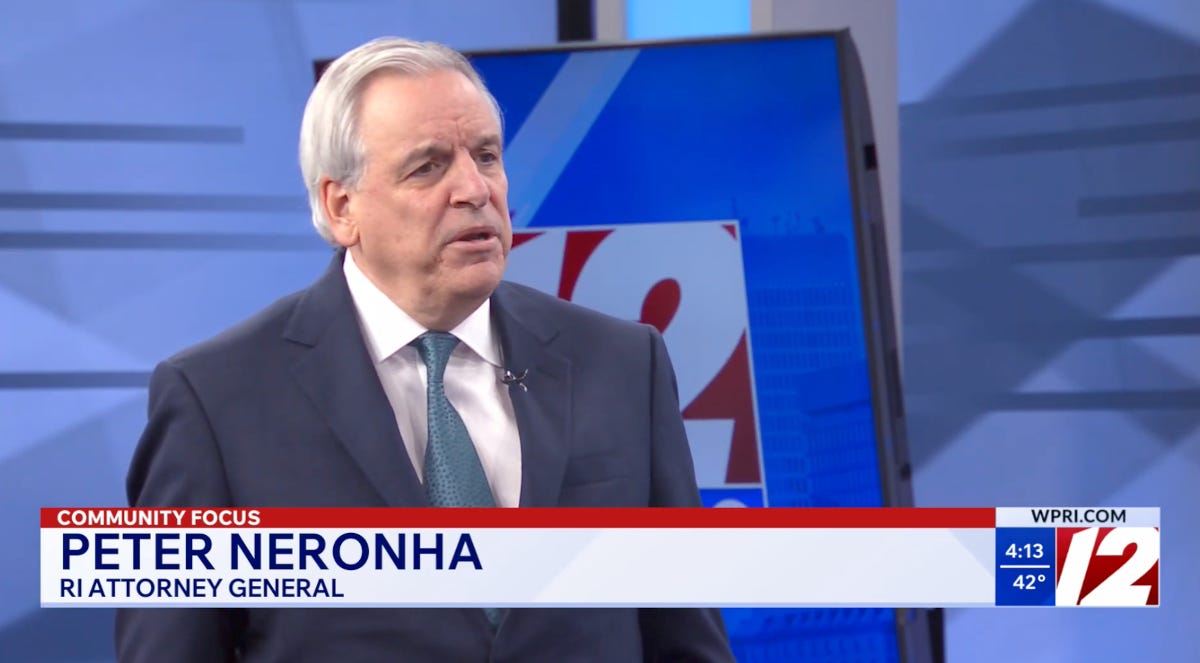
After a nearly seven-year investigation, the Rhode Island Attorney General’s Office has released a report detailing its findings of sexual abuse in the Catholic Diocese of Providence—in a state that boasts the highest proportion of Catholics anywhere in the country. Attorney General Peter Neronha said his office examined over “250,000 pages of documents held by the Diocese dating back to 1950.“
But even that won’t tell the whole story because the Catholic Church refused to help him any more than he was legally permitted to go.
According to the report, which can be read in full here, Rhode Island doesn’t have a law regarding a grand jury reporting statute. You may recall that this whole ball got rolling after a Pennsylvania grand jury report came out in 2018, but that’s because, in that state, the law allowed the state to force the Catholic Church to produce certain documents and testify about what had happened. In Rhode Island, however, there’s no such law, which meant Neronha could only work with the documents the Catholic diocese chose to give him. And that left huge gaps in their knowledge:
As described more fully in the next chapter, to a large extent the Diocese cooperated with this review. However, its cooperation was not without important limits, or without delays, and it repeatedly refused my team’s requests for interviews of Diocesan personnel responsible for overseeing the Diocese’s investigations and response to child sexual abuse allegations.
Despite that limitation, Neronha was able to collect testimonies from “nearly 150” survivors of Catholic abuse, which led to criminal charges against four “current and former priests” for crimes “they allegedly committed while serving in the Diocese.” (One of them died in 2022.)
They also identified 75 clergy members credibly accused of sexual misconduct against a child—with over 300 victims between them. Only 20 of them ever faced criminal charges for what they did, and only 14 were ultimately convicted of anything.
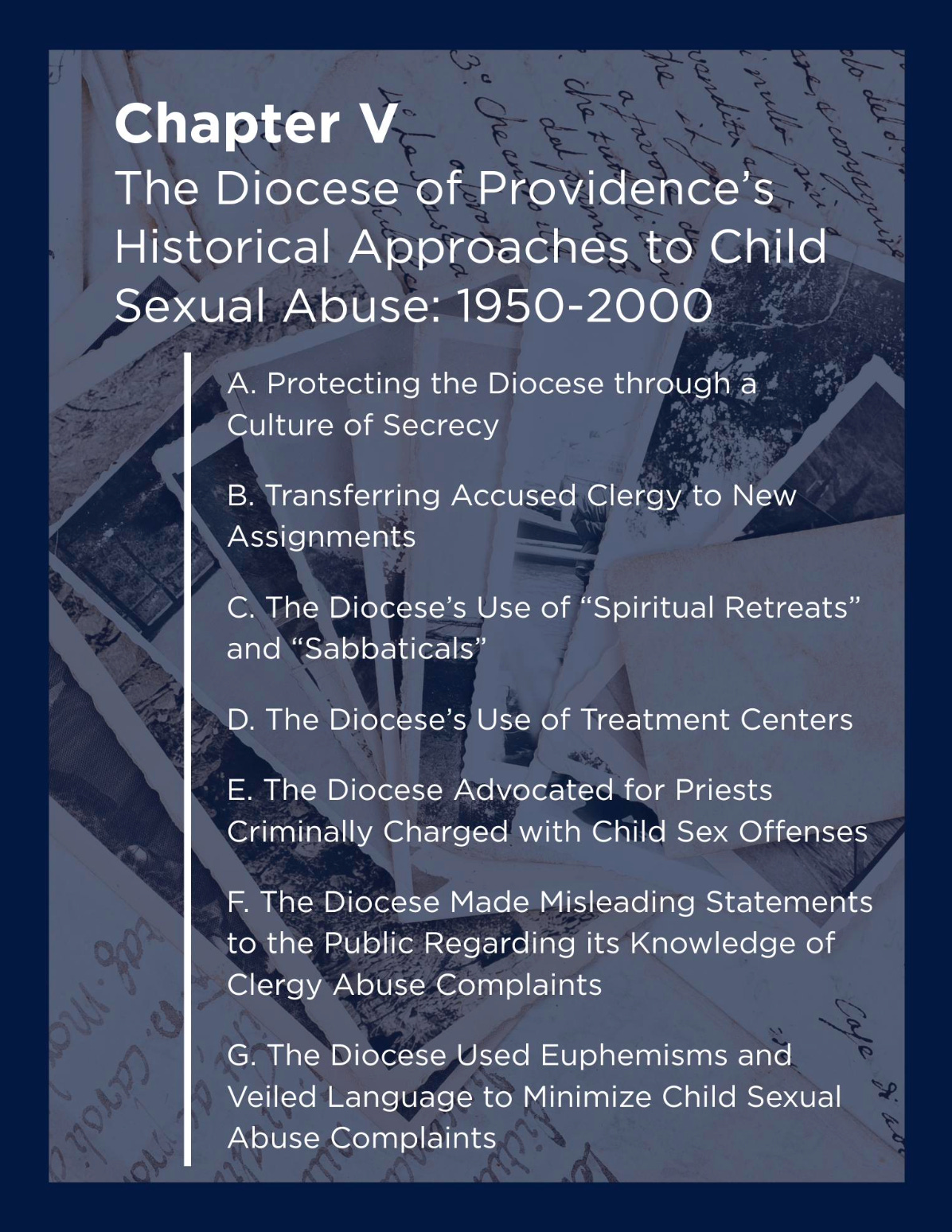
Among other things, they found that priests were routinely assigned to different churches when they were accused of wrongdoing or sent to a “spiritual retreat-style facility” for rehab. That was in the 1950s. But decades later, they were just placed on leave while an internal investigation—not necessarily a rigorous one—could take place.
The bottom line?
This Report confirms what we have long suspected, if not known: for decades, when faced with credible allegations of abuse by Catholic priests, Diocese of Providence leaders focused their efforts on protecting priests and the reputation of the Church, rather than protecting children and holding the abusers accountable. As a result of inaction by bishops and other Diocesan leaders, predator priests were allowed to linger years, abusing their positions of authority and harming countless additional child victims.
…
The true scope of the abuse is likely even greater than reported here, considering that many abuse survivors never come forward, while others are only able to do so many years after their abuse. Some survivors died before telling their stories, while others have chosen to keep their stories private…
Among the many damning findings in the report is that there’s evidence of a Diocesan policy to destroy confidential files following priests’ deaths, meaning that some predators may not be known to the public because the Church had a rule to get rid of any paperwork about them after they died (unless there was pending litigation against them). In some cases, there were very limited records about religious leaders’ awareness of misconduct by people under their oversight… even when those priests had a long track record of bad behavior.
The implication is that if the Catholic Church isn’t more proactive about preventing abuse, it’s only going to continue:
“If you’re the Diocese of Providence and you’re listening, this is a scandal you need to own and you need to fix,” Neronha told reporters Wednesday. “We can’t slow walk solutions and we can’t slow walk justice.”
To that end, Neronha made recommendations for how the Church could do better in the future:
His office outlined multiple changes for the diocese, which include providing clear investigative timelines and guidelines. He also stressed the need for the diocese to abandon the practice of requiring victims take polygraph tests and to stop refusing to investigate third-party complaints about priests.
The Catholic Church. for its part, rejected any suggestion that abuse still existed within their Diocese. They want credit for participating in this report to the limited extent they did:
The diocese, in its response Wednesday, pushed back on that view, saying the report would not have been possible without the church’s cooperation.
“There are no credibly accused clergy in active ministry,” said Bishop Bruce Lewandowski in a video statement. “Today’s Catholic clergy here in Rhode Island are good and holy men serving Christ and his people with devotion and out of genuine pastoral concern.”
The problem with that statement is that the Church has repeatedly shown it can’t be trusted to police itself. So why should anyone believe there are no credibly accused clergy in its ranks when they refuse to be transparent about that very topic? The report even says there’s currently no policy for even monitoring credibly accused clergy members.
If the Church won’t cooperate in full, though, then the legislature needs to act. That means allowing grand juries to release their reports even when there are no indictments, expanding the statute of limitations for second-degree sexual assault so that survivors of abuse have more time to come forward, and creating a “revival window” for previously expired claims of sexual assault by clergy members to be brought forth. Those changes have worked in other states where they’ve been adopted and they’ve allowed more survivors to challenge their abusers in court.
The most damning part of this report may not even be the number of accused priests or the hundreds of victims. It’s the fact that investigators still don’t know the full extent of the crimes. Not because the abuse didn’t happen, but because the Catholic Church made sure parts of that history would never see the light of day. That reinforces the conclusion we’ve seen in every report like this one: When forced to choose between protecting children and protecting the institution, Church leaders always choose the institution.
That’s why the argument that the Church has reformed, or that today’s clergy members can be trusted, shouldn’t be taken all that seriously. Reform requires accountability. Accountability requires openness. We don’t have openness. And an institution known for covering up abuse has no right to demand blind trust from the rest of us.
That’s why these reports are so damn important. It shows everybody how these systems operate and how institutions like the Church allowed predators to remain in positions of authority for years. This has never been about one bad diocese or a handful of priests. This has always been about an institution that allows predators to thrive because they could always sleep peacefully knowing they would be protected.
The only reason the public knows any of this is not because of the Catholic Church’s transparency. It’s because prosecutors and journalists and survivors have never allowed the story to disappear. The fact that we’re still learning new information in 2026—decades after the first wave of scandals exploded into public view—shows why these investigations remain necessary.
I find this situation sickening, but unsurprising. Pedophiles go where the kids are, and a bureaucratic institution like the RCC will always tilt toward self-preservation. I walked away from the Catholic Church nearly sixty years ago. I was about nine months into my tour in Vietnam and in a pretty dark place. I went to church for the last time as any kind of a believer, when we were all treated to what one guy called a ‘Kill a Commie for Christ’ pep talk. According to that idiot priest, we were among God’s chosen sent to protect mother church against the godless. There may have been someone there that day who bought that nonsense, but the great majority only wanted to survive and go home. I walked away and never looked back. The years have only reinforced that decision for me.
If a restaurant chain had a history of molesting children even a fraction of the scale of the RCC, there would be a nationwide outcry to shut that restaurant chain down, followed by unceasing demands to prosecute that chain.
Where is the call to hold Holy Mother Church accountable?