
This newsletter is free and goes out to over 25,000 subscribers, but it’s only able to sustain itself due to the support I receive from a small percentage of regular readers. Would you please consider becoming one of those supporters? You can subscribe via Patreon or the Subscribe button below! You can also make one-time donations through Venmo, CashApp, or PayPal.
During a “State of the Force” address in Virginia yesterday, Defense Secretary Pete Hegseth announced the formation of a new “Office of Religious Affairs.” The office would give military chaplains a direct line to him and make sure the needs of religious service members are being met.
While this office is supposed to support service members regardless of their beliefs, Hegseth spoke about it in explicitly Christian terms. And when the official memo announcing the office was released, it only confirmed that the resources were geared almost entirely toward religious programs.

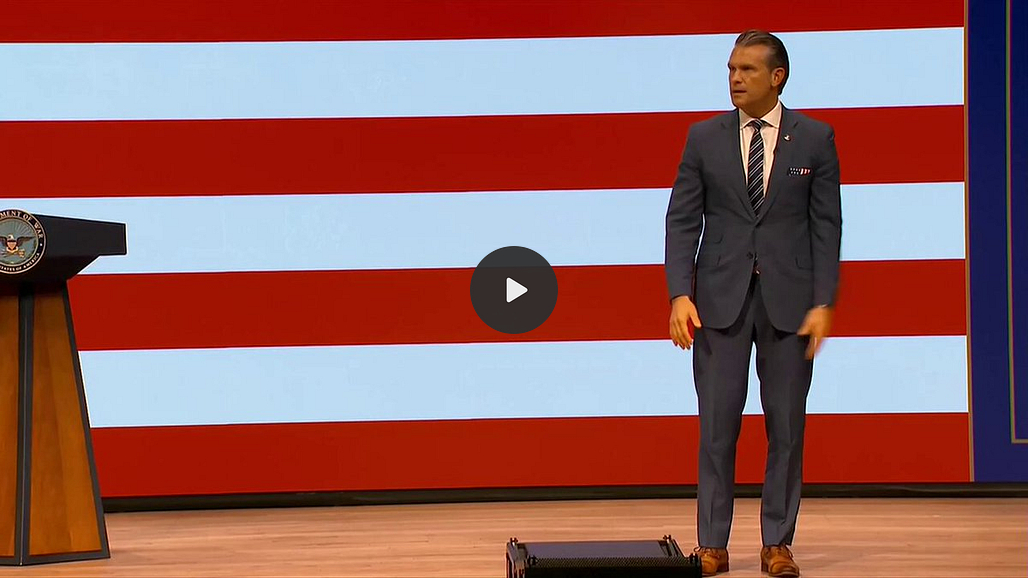
Today, at my direction, I’m establishing the Office of Religious Affairs. Starting today and for Secretaries of War after me, the Office of Religious Affairs will report straight to the top.
No staff filters, No bureaucratic dilution. A direct line to the Secretary.
This is not going to be a paper-pushing shop. It’s gonna have real teeth. They’ll protect budgets, demand infrastructure, and strengthen religious support.
The experts—our chaplains—will finally have an advocate at the highest levels. Policy and resources will serve the mission, not smother the mission. As Psalm 33:12 extols us, “blessed is the nation in which God is the Lord.”
250 years ago, we rejected an earthly king, an ocean away, appealing instead to a heavenly king above. George Washington made sure that the Continental Army had chaplains back at the beginning, back in 1775. That force appealed to Heaven. And we still do today. Our national motto is, after all, “In God We Trust.”
Today, we reaffirm that trust. We’re placing spiritual health at the same level as physical health.
Our department is, you might say, putting on the full armor of God. Because while we wage physical war, we all know the real battle is spiritual.
God is good. Evil is not. And America’s military must understand the difference.
To be clear, military chaplains already had advocates at the highest levels of government. The military departments had chiefs of chaplains, and the Pentagon had an Armed Forces Chaplains Board. But Hegseth wants to make it sound like he’s the first guy to ever care about religion.
Also, “In God We Trust” only became our official motto in the 1950s due to a religious push during the Cold War; it’s not a Founding Fathers Original™.
So why is this office even needed? Hegseth laid out the rationale for it but even that was based on misleading information.
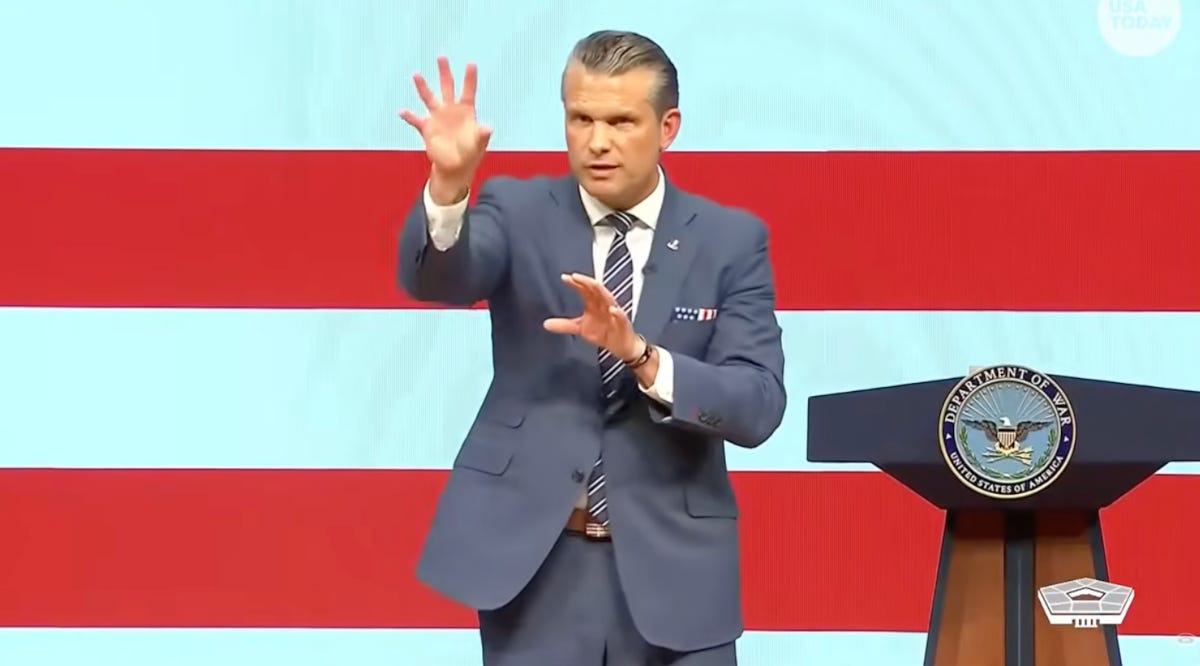
When you actually look at the numbers—and this will be good for the press—less than 5% of our force identifies as non-religious. Less than 5%. Meaning 95 % of our force recognizes an almighty God.
Accordingly, our department, therefore, has a sacred duty. First-class religious support wherever we send our warriors.
Now for far too long, you know we didn’t prioritize that duty at all. It was an afterthought. Political correctness and Secular Humanism got a vote. Chaplains did not.
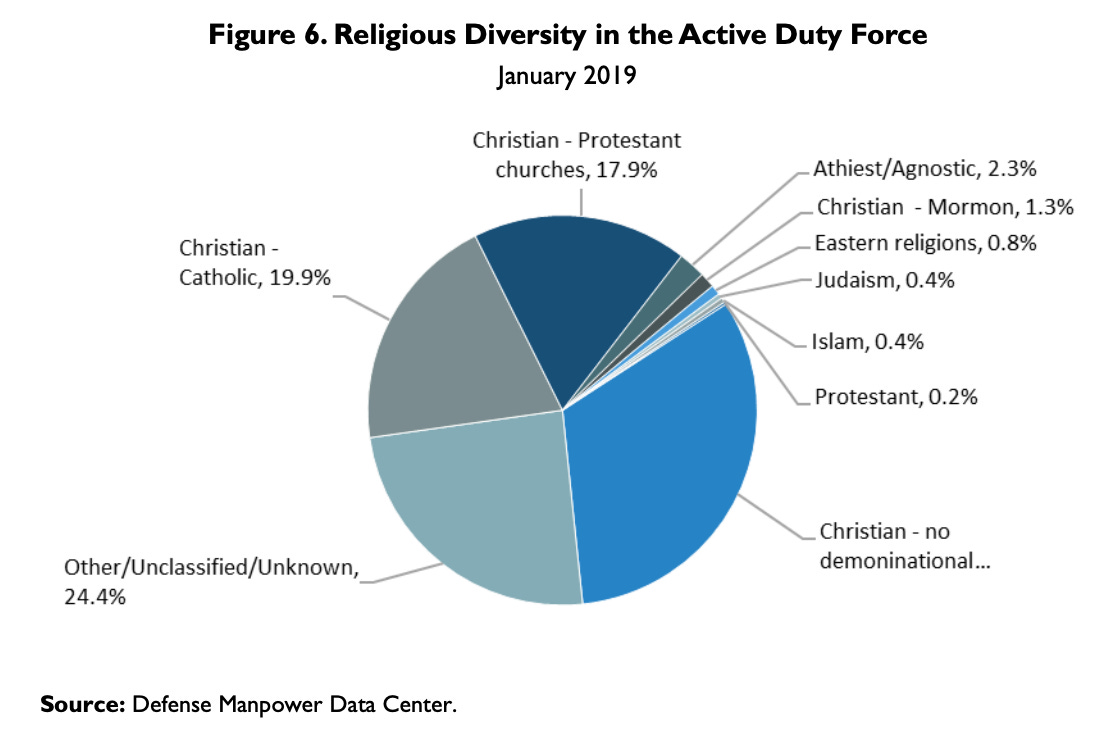
He’s just plain wrong on those numbers. By one estimate, from 2019, over a quarter of the military is either “Atheist/Agnostic” or “Other/Unclassified/Unknown.” And Hegseth is assuming that the latter group is entirely religious. There’s no reason to think that.
Also, if Secular Humanism “got a vote,” that’s news to me considering the Navy rejected a qualified Humanist chaplain applicant in 2018. And even if only 5% of the military was non-religious, why the hell is the Secretary of Defense acting like they don’t matter? That’s a lot of people Hegseth feels comfortable throwing under the bus to appeal to a religious majority—which, by the way, includes plenty of non-Christians and Christians who don’t support what he’s doing.
According to Hegseth’s memo, which laid out the functions of this new office, it will be able to advocate for and direct resources toward religious programming throughout the military, but other than a single disclaimer saying the memo can’t be used to compel participation in religious activities or diminish the rights of anyone “of any faith or no faith,” there are no real safeguards in place to make sure atheists and non-Christian religious minorities have their own needs met.
The memo also says the office will use “research, technology, and analytical tools to support and assess spiritual fitness, spiritual readiness, and spiritual resilience across the Total Force.” Those terms, however, are never defined. What does that mean for non-religious service members? How do you “assess spiritual fitness” for people who aren’t spiritual in a religious sense? Are those assessments voluntary or mandatory? And are the results of those assessments going to play a role in who gets promoted, deployed, or fired?
The “analytical tools” bit is frightening, too, given all the concern over Artificial Intelligence. Which tools will they use? What information will they collect? Who will see the results? There’s so much ambiguity here! Is ChatGPT going to decide if you’re sufficiently spiritual?
It’s deeply ironic to see Hegseth now embracing spiritual fitness given that, last year, he eliminated the use of the Army’s “Spiritual Fitness Guide” meant to help soldiers “develop a sense of purpose and mental resilience” because he argued it advanced secularism, didn’t reference “God” enough, and talked too much about woke topics. Apparently Hegseth doesn’t have a problem with any of this. He just has a problem when the definition of “spiritual fitness” is broad enough to include service members who find purpose and meaning without God. When that was still the case earlier this year, he got rid of Maj. Gen. William Green Jr., who served as the Army chief of chaplains, without explanation.
Another part of the memo highlights the need to fund and provide resources for “faith-based homeschool support for military families.” Will there be funding for secular alternatives for that? Is this taxpayer money being used to proselytize? Hegseth doesn’t say.
It also says the office will push for funding and resources for “faith-based initiatives supporting Department-wide suicide reduction.” The memo doesn’t refer to clinical standards, secular alternatives, or restrictions on proselytizing. In the past, Hegseth complained that chaplains had become “therapists instead of ministers.” But now he wants faith-based groups directly involved with suicide prevention and psychological resilience. What is that if not therapy?
The memo says the office will be tasked with identifying “unfunded and underfunded religious affairs requirements,” but there’s no indication that secular counseling or community needs will receive the same kind of priority.
It repeatedly cites the “free exercise of religion” as guaranteed by the Constitution yet ignores the Establishment Clause and the need for government neutrality on religious matters.
There’s also a more pressing contradiction. The memo orders the military to identify underfunded religious needs, but Hegseth just reduced the number of religious affiliation codes from 211 to 31, eliminating specific identifiers for atheists, Humanists, Pagans, Unitarians, and scores of minority traditions. There are more generic options like “no religion” and “agnostic,” but the military will now have less precise information about the very people this office is supposedly being created to serve. You can’t meet their needs after erasing evidence of their existence.
We’ve long known Hegseth is using his position to advance Christian Nationalism. Now he’s placing the military’s entire existing chaplaincy apparatus under a single office that answers directly to him.
That may be the most consequential part of the memo: the authority it gives the office’s director. That person will have control of the Armed Forces Chaplains Board, represent Hegseth when it comes to religious matters in “engagements with Congress,” and represent him in meetings with “civilian religious endorsing organizations.” (Will that person be consulting with any atheist, Humanist, or non-Christian groups? No clue.)
To put that another way, Hegseth isn’t just creating an advisory office. He’s centralizing religious policy for the military under a single official who answers directly to him, with remarkably few limits spelled out in the memo.
Everything the memo does say, though, points in the direction of Christianity. If you’re an atheist, the implication is that you could be classified—formally or informally—as less moral, less resilient, less “spiritually fit,” and therefore less ready to serve. Hegseth has never outright said atheists are unfit to serve, but he’s repeatedly said that “Secular Humanism” is a problem.
The irony in all of this is that Hegseth’s colleague Marco Rubio said earlier this year that Iran’s leaders “make geopolitical decisions on the basis of pure theology.” He was right in calling out the danger of theology. But here’s Hegseth doing the same damn thing, invoking a “heavenly king” and claiming the military’s real battle is spiritual. Where’s the outrage? You can’t complain about religious radicals in other parts of the world when you welcome them in our own government.
And the way Hegseth talks about this new office, atheists and religious minorities are going to bear the brunt of his latest idea.
A military of grown-ups accepts responsibility and accountability. It would not need to shift hopes and blame onto divine intervention. Pete infantilizes the military, because he himself just can't grow the f up.
Office of Religious Indoctrination. Build an army that doesn't question orders or missions be ause they are from God.