
This newsletter is free and goes out to over 23,000 subscribers, but it’s only able to sustain itself due to the support I receive from a small percentage of regular readers. Would you please consider becoming one of those supporters? You can use the button below to subscribe or use my usual Patreon page!
Last year, a Catholic priest from the St. Cloud Diocese in Minnesota was charged with “sexually abusing, physically assaulting and threatening a woman to whom he had given spiritual guidance.” A woman said Father Joseph Herzing had counseled her over a period of several years beginning in 2018, and that relationship soon turned sexual… and violent.
Setting aside the horrific details of the allegations, Herzing was a priest. He was supposed to be celibate. He was in a position of power over a woman he was guiding. Even if everything had been consensual—and the allegations said they were not—it would have been unethical and potentially criminal.
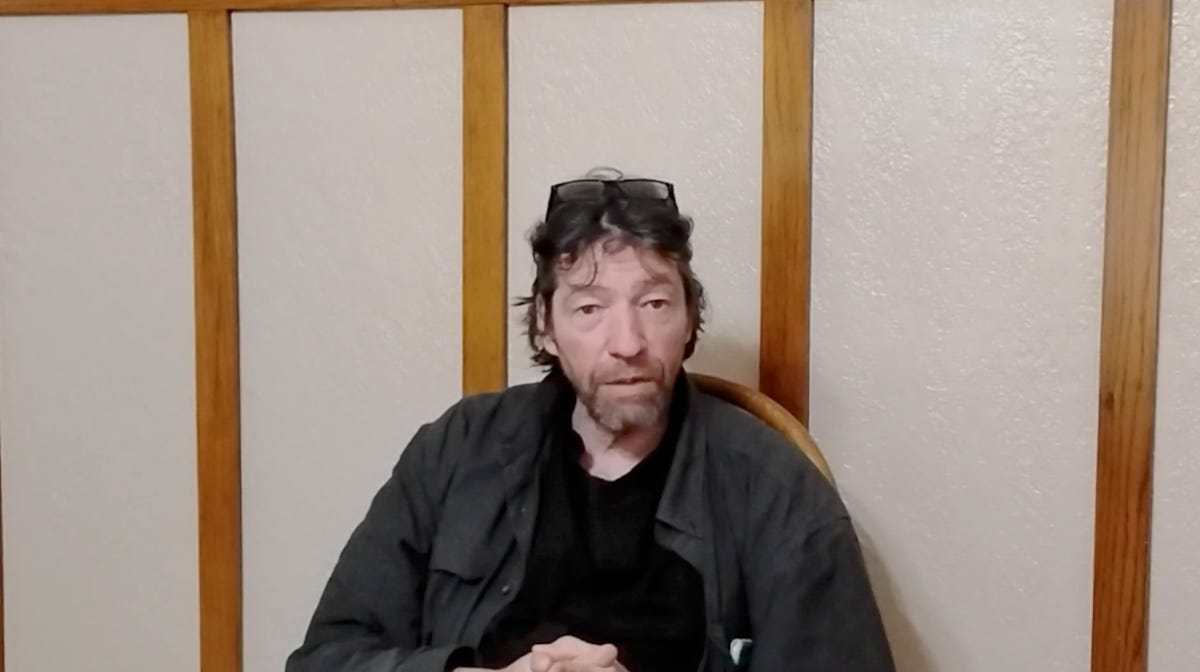
Last year, a different Catholic priest from the St. Cloud Diocese in Minnesota was also charged with sexually abusing a woman. A woman accused Father Aaron Kuhn of assaulting her repeatedly over the course of three years when he was providing her with spiritual advice.
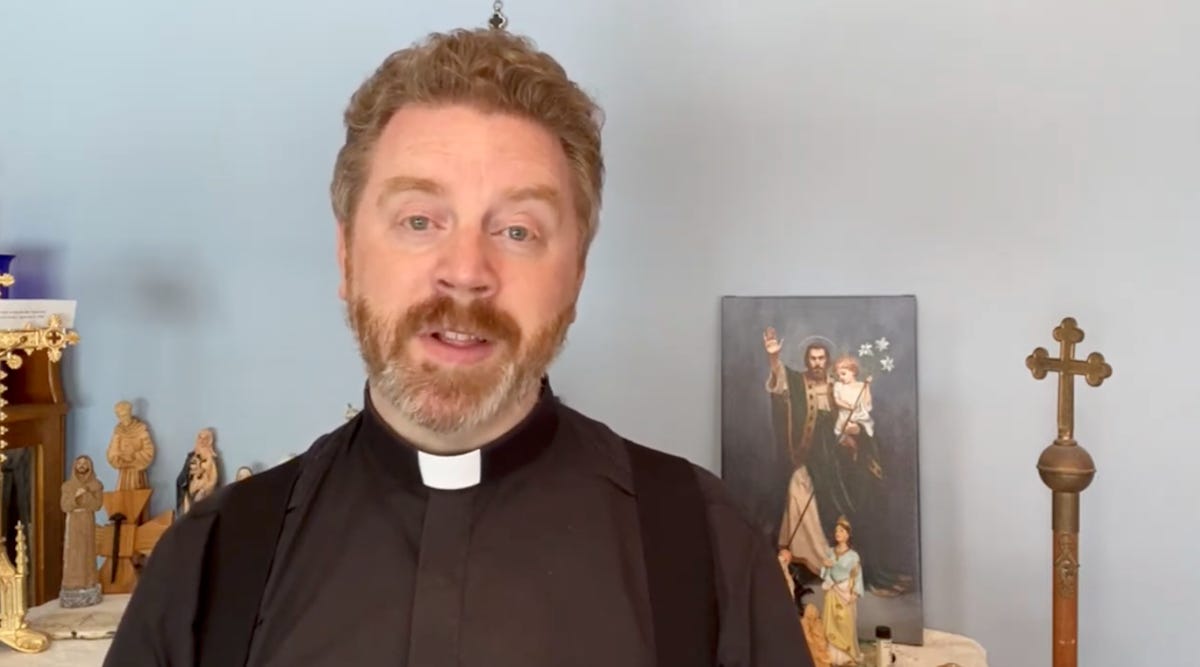
According to the complaint, the victim told police that Kuhn used his role as a spiritual advisor to manipulate her and pressure her into sex. The complaint says the victim reported that the abuse escalated over time, although she repeatedly asked Kuhn to stop.
If the allegations were true, what he did was also unethical and potentially criminal.
The reason all of this could be criminal is because many states have laws that prohibit “improper sexual contact” by someone in a position of power over someone else—even if both people are of legal age and even if they say it’s consensual. The law says consent cannot truly be given in those circumstances due to the power imbalance. We’re talking about a professor and a student, or a boss and an employee, or a therapist and a client.
As I mentioned in a separate story recently, only 14 states (plus the District of Columbia) have laws in place to punish clergy members for similar actions.
Minnesota is one of those states. It has a law on the books (Statute 609.344) that says sexual penetration is a crime if someone “is in a prohibited occupational relationship with the complainant.” Clergy members fall under that umbrella.
But here’s the wild twist to this story.
Both priests have the same defense lawyer—Paul Engh—and he has filed two separate motions over the past few weeks to have those particular charges dismissed.
On what grounds? On the grounds that punishing these men amounts to a violation of their religious freedom. Engh writes in one case that the law “expressly makes Father Herzing guilty of crime because of his status as a priest” and that, because he’s a priest, “it creates an irrebuttable presumption that complainant did not consent and it deprives Father Herzing of a jury trial on that issue.”
In other words, if he was just a random dude named Joe, he would not be charged with this particular crime, but because he’s a priest, he’s in trouble. And what right does the state have to decide what the appropriate boundary is between priest and parishioner?
It’s hard to accept that idea, though, because none of this is about religious oppression. It’s just the nature of a power dynamic. The state isn’t going after these priests because they’re religious; they’re going after them because their job gives them authority over other people.
Yet in that same motion, Engh also argues that it’s unfair to target Herzing because it’s wrong to assume that a priest who gave someone spiritual advice in some capacity is always on the clock as a priest. As if that’s a vocation where you can take off your collar at 5:00pm before heading off to a strip club.
Also, he added, the lady that’s suing his client is totally a slut with a priest fetish.
The Complainant has been predator of the sexually unavailable. She has a history of intimacy with at least four Priests, if not more. Here she pursued a sexual relationship disconnected from any spiritual advice. Because she knew that by status and religious doctrine, a Priest cannot give advice, aid and comfort and still have sex with her. Once her previous Priest sexual relationships had concluded, she announced to Church officials that she has been victimized. When what really happened is that she succeeded at her multiple seductions, all of them distinct from the Priest/Penitent relationship.
You see, judge, SHE took advantage of ME!
Leave it to a lawyer for a Catholic priest to go all in on victim-blaming as a strategy…
Engh uses the same arguments—word for word, in many parts—in the motion to dismiss the charges against Kuhn. (Given the way it’s worded, it’s possible we’re talking about the same victim.)
Dan Sealana (Skeptically Dan) wrote a lengthy article about the absurdity of this argument that is well worth your time. But he says that the argument made by the defense lawyer doesn’t carry a lot of weight for good reason:
Perhaps Fr. Kuhn’s religious liberty defense would garner more sympathy if he were being prosecuted by the state for practicing his religion, not for violating it. There is no Catholic ritual or practice that involves a celibate priest having sex with a layperson.
Sealana also dismisses the argument that the victim herself should be blamed for what she did:
… one may reasonably argue that the fact that the woman revealed these compulsions to Fr. Kuhn makes the priest more culpable for his actions, not less. (If a woman in a secular office environment told her male supervisor that she’s had sex with many of her bosses, the male supervisor would, at the very least, know that he shouldn’t be spending too much time alone with this woman.)
I agree with him. Someone in a position of power has the responsibility to avoid these situations. Even if you remove the physical assault accusations and threats from the mix—and even if you set aside the Catholic Church’s rules banning priests from having sex—a priest sleeping with a parishioner is wildly inappropriate to the point that the law should punish it.
For what it’s worth, the Diocese of St. Cloud says it suspended both men after they learned about the allegations against them. But neither statement acknowledged the power dynamic concern, only the healing of the priests.
This defense strategy says a lot about how the Catholic Church views accountability. It’s not like the state is criminalizing religion or policing anyone’s sermons. They’re enforcing the same basic principle that governs every other profession built on trust and vulnerability. Religion shouldn’t grant anyone immunity from the kinds of crimes that would punish others with the same kind of power.
Priests, just like therapists and teachers, aren’t just adults free to do as they please. There’s a code of conduct that needs to be obeyed, whether or not it’s spelled out, because of the asymmetry of their relationships. You can’t switch off that relationships when the work day is over. To believe that fundamentally ignores how coercion works. Thankfully, the (secular) law cares more about victims than these priests and their institution. There’s no reason clergy members should be the one profession given the privilege of pretending that their authority carries no consequences.
Okay, so let's flip EVERYTHING upside-down and sideways, shall we? This goes past victim-blaming and into a whole new territory: that because the priest isn't SUPPOSED to have sex that any sexual relationship MUST have been initiated by the other party! Uh-huh, SUUUUUUUURE they did.
Does that mean that all the boys molested by priests initiated that action as well? [Man, this shit makes me DIZZY, it is SO FUCKED UP!]
There doesn't seem to be much of anything that cannot be justified in the name of religious freedom. Not to blame the victims here, but taking advice from the clergy is almost always a bad idea.