
This newsletter is free and goes out to over 24,000 subscribers, but it’s only able to sustain itself due to the support I receive from a small percentage of regular readers. Would you please consider becoming one of those supporters? You can subscribe via Patreon or the Subscribe button below! You can also make one-time donations through Venmo or PayPal.
It’s been a while since I’ve posted anything about Ark Encounter, the Noah’s Ark “replica” in Williamstown, Kentucky, but it’s about to celebrate its 10-year anniversary this July, so it seems like a good time to remind everyone how big of a disaster this whole thing has been—and not just because of the fake “science” it presents to children and gullible adults.
Even if you haven’t paid much attention to it for a while, watchdogs have been tracking its failures for years now.
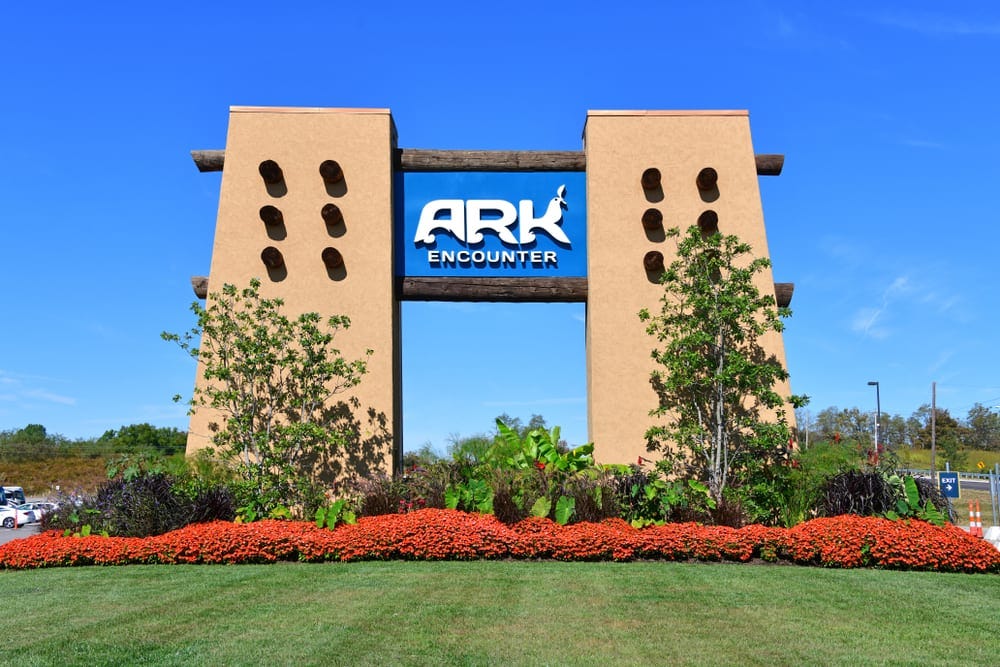
Just consider the massive government investments.
When Creationist Ken Ham and his team at Answers in Genesis were looking for a location for their $100+ million attraction, they pitched it as a way to create jobs. One projection (from the state) said Ark Encounter was “expected to annually generate… a minimum of 3,000 new full-time equivalent jobs.”
Unfortunately, those jobs turned out to be available only for people who agreed to Answers in Genesis’ fundamentalist Christian worldview. Even wannabe janitors had to agree the Earth was only 6,000 years old and gay marriage was an abomination.
Besides that, the city of Williamstown, which desperately wanted to be the home of the Ark, offered Ham’s team $62 million in junk bonds if they built the “Ark” in their backyard. Grant County, which Williamstown is in, gave Ham’s team 98 acres of land for $1. (That’s not a typo. Just a single dollar.)
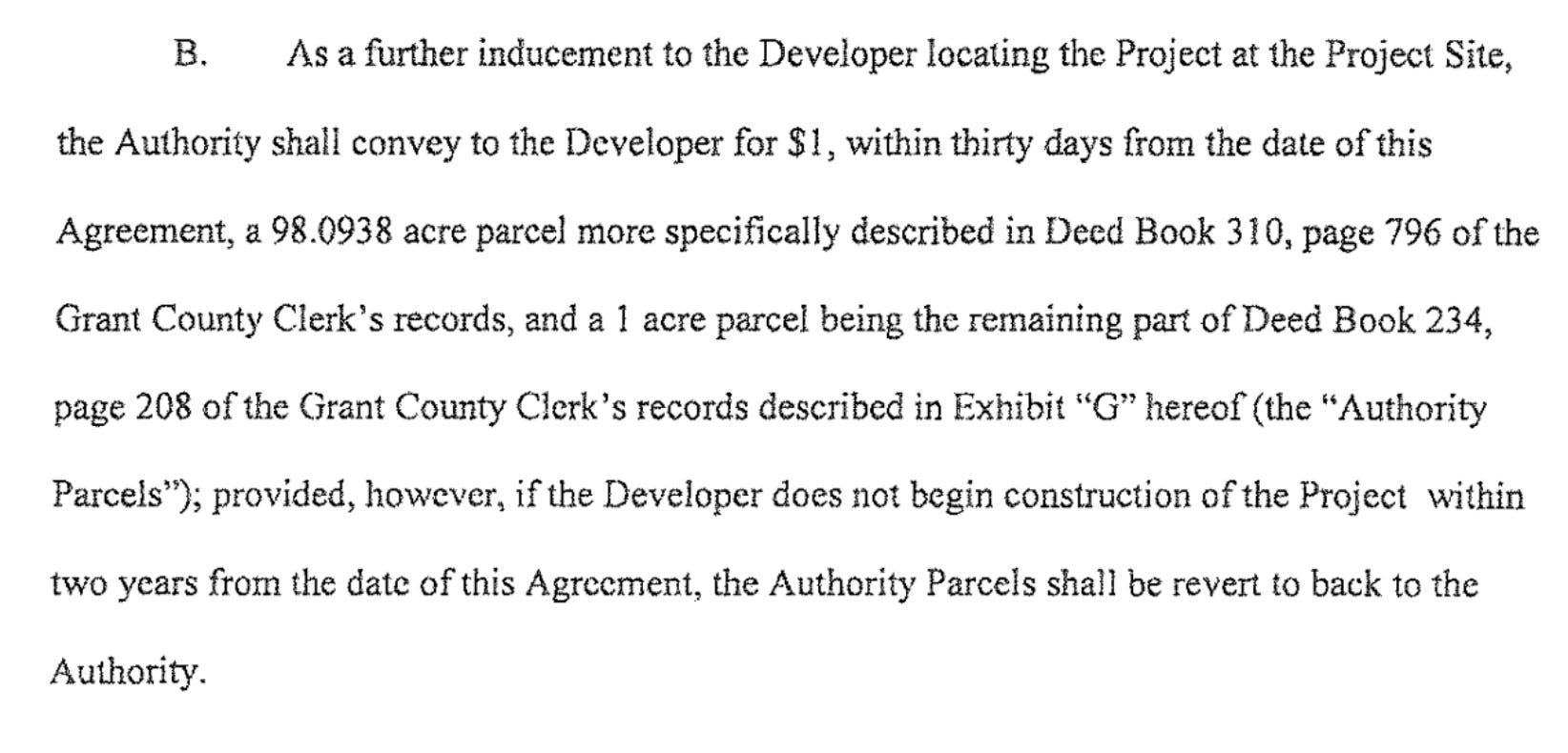
They also said that, over a 30-year period, 75% of Ark Encounter’s real estate taxes would go toward repayment of the interest-free loan. So instead of that money going to the city and the citizens, it would be used to repay those bonds.
Also, 2% of all employees’ paychecks would go back to Ark Encounter to help them pay off the loans, so neither the government nor the employees were getting everything they deserved.
Why would a city and county do all this? Because they hoped that the attraction would be so popular, it would increase tourism, liven up what was in many ways a dying town, create well-paying jobs, and be good for all surrounding businesses.
The state of Kentucky even promised Ark Encounter a tax incentive worth up to $18.25 million over the next decade based on attendance and sales. (Lawsuits to stop that, due to the discriminatory hiring, were unsuccessful.)
All of these numbers were based on expectations that Ark Encounter would draw in a certain number of tourists each year. And the Creationists—who should never be taken seriously when it comes to large numbers—offered the best-case and worst-case scenarios in a 2013 “feasibility report.” They assured everyone that they would bring in between 1.2 million and 2 million visitors in the first full year of business.
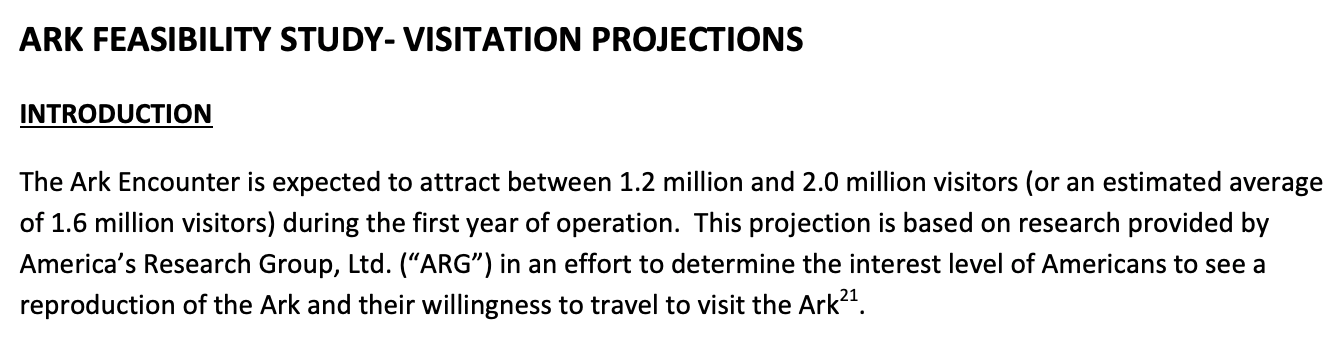
Ken Ham openly bragged about this on the website for Ark Encounter at the time.

That same report assumed a 4% increase in attendance every year over the next decade—a number that could rise to 10% after they expanded. By their math—and Creationists are truly numerical wizards—the money line would always be going up and to the right.
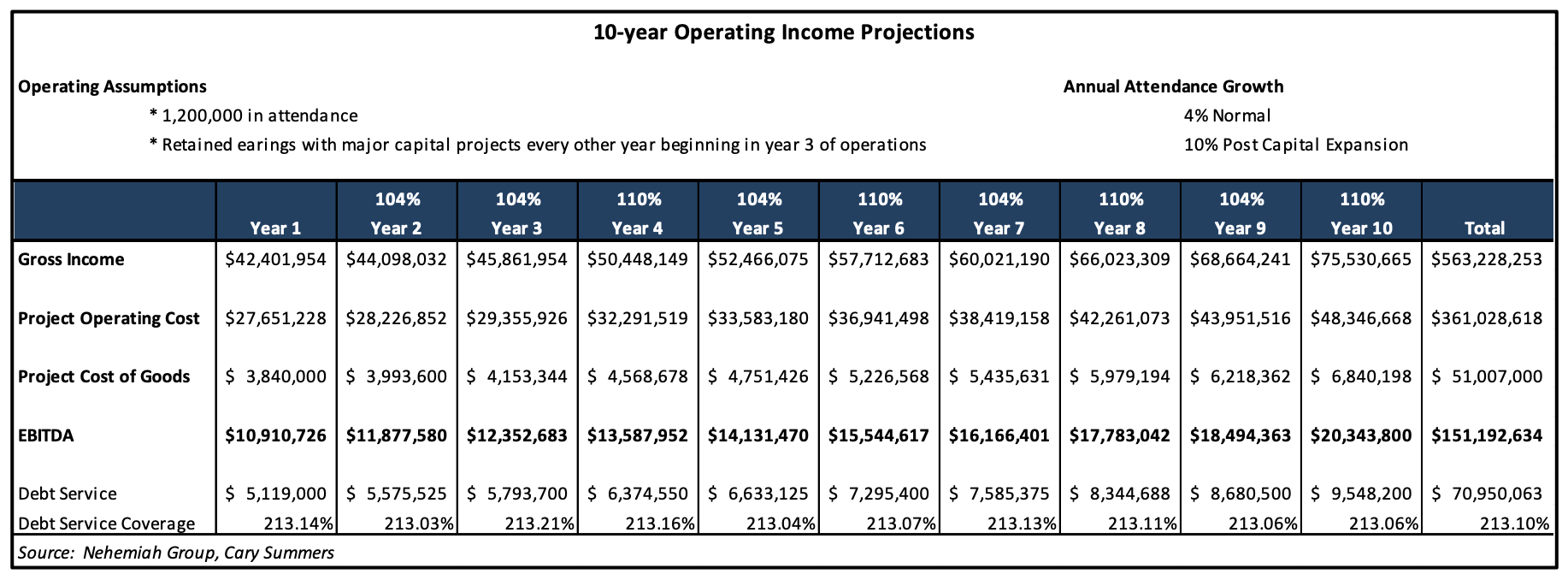
If you do the math, and if Year 1 brought in the “estimated average” of 1,600,000 visitors, then by Year 9, they were expected to have 2,590,984 visitors.
The people who were best known for shrinking large numbers were now artificially inflating them.
But they got the investments they wanted, anyway. Ark Encounter opened in July of 2016. And because it’s a private attraction, the expectation was that the public would never really get to see what the attendance numbers were. Sure, the local government would have to keep track of whether their loans were paid off, but it wasn’t clear if we’d ever have access to real data about Ark Encounter’s finances.
And then something wonderful happened.
The city of Williamstown imposed a $0.50-per-ticket “safety fee” on all tickets sold at Ark Encounter. That money was meant to offset the city’s costs for all the additional police cars and fire trucks that would be needed. (Even if visitors to the Ark were rarely in peril, you needed those resources on hand in case of emergencies.) While Ken Ham fought this at first, he eventually gave up and began paying it a year after Ark Encounter opened.
And because those safety fees were a public record, it wouldn’t be difficult to figure out how many tickets were being sold each month. Ever since that data became available, local paleontologist Dan Phelps has been regularly filing public record requests to get access to those numbers, allowing us to calculate monthly ticket sales at Ark Encounter.
Have I been keeping track of those numbers in an easy-to-read spreadsheet for several years now?
Hell yeah I have.

Here’s what I can tell you about attendance:
The attendance has never even come close to hitting that estimated average of 1.6 million visitors. Even when you factor out the year COVID shut these parks down, things have just gone downhill. Righting America’s William Trollinger put together this helpful analysis (counting numbers between July of one year and June of the following year):
And here are the actual attendance numbers:
Year 1(JY 2016-JE 2017): est. 800,000 (50% of projected attendance)
Year 2 (JY 2017-JE 2018): 865,761 (52% of projected attendance)
Year 3 (JY 2018-JE 2019): 875,882 (51% of projected attendance)
Year 4 (JY 2019-JE 2021): 841,772 (44% of projected attendance)
Given the impact of COVID on Ark attendance, I left out March 2020-February 2021
Year 5 (JY 2021-JE 2022): 775,731 (39% of projected attendance)
Year 6 (JY 2022-JE 2023): 782,660 (36% of projected attendance)
Year 7 (JY 2023-JE 2024): 764,258 (34% of projected attendance)
Year 8 (JY 2024-JE 2025): 682,101 (27% of projected attendance)
Year 9 (JY 2025-JE 2026): 664, 813 (26% of projected attendance)
For May-June 2026 I used the attendance numbers from May-June 2025. If history is any guide, this may serve to overestimate Year 9 attendance.
However you want to parse the numbers, the takeaways here are that attendance keeps falling and Ark Encounter has never even come close to the “worst-case scenario” of 1.2 million visitors. You can’t blame that on COVID either.
Because they’re not hitting the projected attendance numbers, it means the city isn’t attracting tourists in the volume they had hoped, which is bad news for local stores, hotels, and even schools that rely on property taxes.
Williamstown officials took a misguided gamble on this Creationist attraction and the city has paid the price for it. The sales tax rebate (worth $1.825 million/year for ten years) from the state should be on the verge of expiring, which is bad news for Answers in Genesis. Add to that a faltering economy, high gas prices, and the simple fact that this “museum” isn’t worth seeing more than once (even if you’re going there to mock it!) because it’s not like the underlying details ever change, and the future looks pretty damn bad for the Creationists behind it.
Thoughts and prayers.
I got blocked by Ken Ham on Twitter a decade ago. He had all these people bad-mouthing him and his organization... that was all fine.
But I posted their claimed high turnout numbers alongside a near empty image of their parking lot from a busy tourist day, and I was blocked inside 5-min.
What else can one expect from a man who believes the Earth is only 6.000 years old. Not to mention one who believes in his god's "perfect design" despite the fact that he wears glasses.