
This newsletter is free and goes out to over 23,000 subscribers, but it’s only able to sustain itself due to the support I receive from a small percentage of regular readers. Would you please consider becoming one of those supporters? You can use the button below to subscribe or use my usual Patreon page!
A Utah Republican recently attempted to shove religious scripture into the law during a debate on a bill meant to curb drug use.
Or at least that’s what a number of headlines suggested.


It’s why a number of people reached out to me asking whether this was yet another egregious attempt by a Republican lawmaker to shove religion into the law.
Turns out that’s not what’s happening here at all. And I know that because I spoke to the lawmaker who proposed it.
Here’s what’s going on.
The bill in question, SB 45, is intended to target the use of kratom, an herbal substance that produces opioid-like effects on the body. Some people use it to treat chronic pain, which is why users don’t want to see it banned. The problem is that, when mixed with other substances, kratom can be deadly, which is why it’s been called “gas station heroin.” So do you regulate it and tax it, like many other drugs, or do you prohibit it entirely?
In Utah, the solution was to ban concentrated kratom extracts while allowing “whole-leaf” or “pure leaf” kratom products to be permitted in certain situations. In-state manufacturers will be allowed to make certain other kratom products for one more year, but they won’t be allowed to sell them within the state’s borders. Kind of like an off-ramp to give them some time to figure out a new business model.
But before they settled on that compromise, when the bill was up for debate, State Rep. Matt MacPherson suggested an amendment: He wanted to wipe away the entire text of the bill and replace it with the “Word of Wisdom,” the Mormon text that calls for complete abstinence from vices like tobacco, alcohol, and “hot drinks” (like tea and coffee).
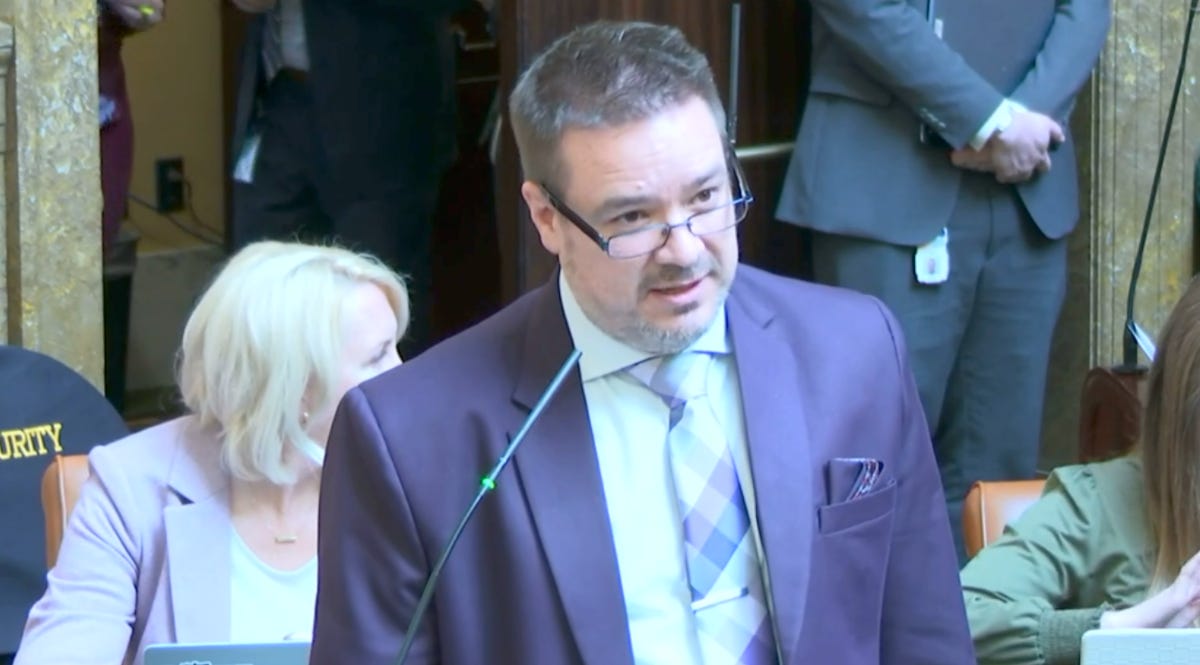
He made it clear this was all tongue-in-cheek and not meant to be taken seriously. But he did want to make a point: The state currently allows the sale of alcohol, but we know how deadly alcohol can be. Utah also sells tobacco, but that leads to death as well. So why were lawmakers trying to ban a potentially dangerous substance when they clearly didn’t have a problem with objectively deadlier drugs?
By suggesting they adopt the Word of Wisdom, MacPherson was basically suggesting the state should enforce a ban on all “dangerous” products. After all, didn’t the legislators know better than everyone else?
“Rather than taking small, little bites at this and kind of playing whack-a-mole in every product that comes on the market,” MacPherson said. “I just assumed we would just go all the way and put into effect a health code that’s already been adopted in vast areas of Utah, and really just impart the wisdom of the Legislature upon the masses on the streets, that just don’t have the same moral clarity we do.”
It was sarcasm, albeit without all the winks normally associated with it.
It’s downright amusing when you look at an excerpt from the bill that was in place before MacPherson tried to alter it—complete with nuance and legalese—and the full amendment after he decided to change it:


This wasn’t just a cut-and-paste job either. MacPherson made a couple of alterations from the version promoted by the Mormon Church, perhaps in order to avoid any church/state separation issues: He took out any references to God. He replaced the word “saints” with “state residents.” He rewrote certain portions of the scripture to downplay the religiosity of it all, while keeping the “wisdom” in place. But otherwise, this was ripped straight from Joseph Smith’s 1833 “Doctrine and Covenants” book.
According to Utah-based KSL, this appeared to be “the only time in recent memory that a lawmaker has proposed inserting scripture into state code.”
It didn’t appear that people were amused by his religious stunt, though. The bill’s sponsor, State Rep. Katy Hall, politely shot down the attempted amendment and urged MacPherson to take this shit seriously:
“Until you’ve had to see opioid addicts at work and how their addiction affects everything in their lives, including the pain control that they have when they’re going into surgery, including the withdrawals that they have, including having to be on other opioid drugs to stop the pain that’s happening when they’re addicted,” Hall said, “I don’t think you understand that it’s different than alcohol. It’s different than tobacco.”
State Senator Mike McKell, who also sponsored the bill, added that the situation was “a little weird” but brushed off the stunt, saying “I think it’s good to have levity up here, and we need to have levity.”
MacPherson later responded by saying he did indeed take all this seriously, but he did want an answer to his (rhetorical) question: “When we are talking about alcohol and tobacco and other items, we currently… regulate and we tax. So I ask the body to ask yourself: For far more dangerous products that have far greater effects on the totality of this state, why is regulation and tax the appropriate way forward, and why is ban the way forward on other products?”
It’s a fair question… but it went unanswered. By voice vote, the amendment was shot down and the previous version of the bill ultimately passed. That version is now awaiting the governor’s signature.
I don’t have a strong position on this particular bill, though I think it makes far more sense to regulate and tax those kinds of drugs that alleviate pain for people who suffer.
What struck me as interesting about this whole conversation is that much of the media—not to mention Reddit threads—didn’t seem to understand the point MacPherson was trying to make. Numerous headlines, like the ones I mentioned earlier, made no reference to his sarcasm, using phrases like “LDS Word of Wisdom introduced in debate over Utah’s kratom ban,” “With a kratom bill on the table, lawmaker asks—why not write the Word of Wisdom into Utah law?,” and “Utah lawmaker attempts to put ‘Word of Wisdom’ in state code.”
Somehow, the fact that the Word of Wisdom inclusion was a joke didn’t come up unless you read the text of the articles, which many people simply don’t do.
I reached out to MacPherson himself to see what he made of the coverage. He didn’t make any comments to the media at the time, but he was kind enough to respond to my questions.
MacPherson told me his concern was that the bill “wasn’t serious” because it wasn’t going after consumption or purchasing, only selling and manufacturing. In other words, it was going after businesses, which he thought would just push production out of state or online. It was nothing more, he told me, than “pointless legislation that makes some people feel good.” In his view, synthetic kratom needed to be banned (since it had no beneficial use) but everything else needed to be regulated and taxed.
(MacPherson was one of a handful of votes against the final version of the bill, though he was vastly outnumbered by its supporters.)
As far as the religious joke went, he didn’t mind the misleading coverage because his point “wasn’t intended for anyone but the legislature.” Even Rep. Hall, who spoke out against him, was someone who knew what he was trying to do:
Rep Hall was aware of the substitute and laughed heartily when I first showed it to her, but she asked me not to run it because her legislation and position on the issue was serious. She played her role appropriately and it had the intended effect during the floor presentation.
Ultimately, he told me, he considered it a “small victory” that some kratom manufacturers will be able to continue working in Utah for a while before the law forces them to shut down or move out of state.
The good news is that this isn’t some creeping theocratic plot. It’s more like evidence for a very lazy, clickbait-y media ecosystem. It’s unfortunate that the fair questions raised by MacPherson didn’t get more coverage, so I understand why trying to draw attention to them by injecting religion into the mix was a valid strategy even if it didn’t work as intended.
Sometimes the spectacle becomes the story.
While I have precious little use for any religion, I classify Mormonism under the heading “Some people will believe anything.”
OT right out of the box: A high performing Islamic K-12 school in Alabama has Republicans freaking out. Free link from the NYT.
https://www.nytimes.com/2026/03/16/us/politics/muslims-alabama-islamic-school-republicans.html?unlocked_article_code=1.TlA.K60I.guCEjSHSXOJW&smid=url-share